A good e-foil briefing for charter guests takes about as long as inflating the ramp, and it decides how the afternoon goes. Guests who listen are often up on the foil within a few attempts; guests who skip it spend the session falling off and tiring. This is the routine many deck teams settle into in warm winter cruising grounds, with the reason behind each step.
Choose the riding area first
Before anyone touches the board, the crew decides where the riding happens. An e-foil is quiet and quick, and a falling rider can end up some way from where they started, so the area needs to be well away from swimmers, snorkellers, anchored boats and mooring lines, in calm, sheltered water. In the Bahamas or the Maldives, reefs and coral heads close to the surface are the other hazard: choose open water over sand, deep enough for the mast and wing. Local rules on where powered watercraft may operate vary from island to island and inside marine parks, so check them before the first ride.
Agree who watches, too. A crew member follows in the tender at a respectful distance, keeping clear of the rider's line, and someone on the yacht always knows who is out on the water.
What to cover in the briefing
Keep it short, practical and on the swim platform, with the board in front of the guest. These are the points, in this order:
- Kit up first. A helmet and an impact or buoyancy vest go on and are fastened before the guest steps onto the ramp. It is far easier to insist at the start than halfway through the session.
- Hold the remote on deck. With the board switched off, let the guest feel how far the trigger travels and how light a touch it needs. The first panic on the water usually starts with a thumb squeezing too hard.
- Start on the knees. Every first ride begins kneeling, at low speed, with the board flat on the water. Standing comes only once the guest can hold a steady line on their knees, because standing too early is the commonest route to a hard fall.
- Practise falling. Release the trigger, fall away to the side, flat and never towards the board, and wait until everything has stopped before swimming back. The wing and propeller sit under the board, which is exactly where nobody should land.
- Agree the hand signals. A hand on the head means all is well, an arm waved overhead means come and help, and pointing at the yacht means the rider is heading in. Over wind and water, shouting does not carry.
- Set the edges and the finish. Point out the limits of the riding area and the swim zone around the yacht, and agree when the session ends: when the guest is tired, when the breeze builds or when the light starts to go. Tired riders fall more often and get careless near the hull.
Launching and landing on the ramp
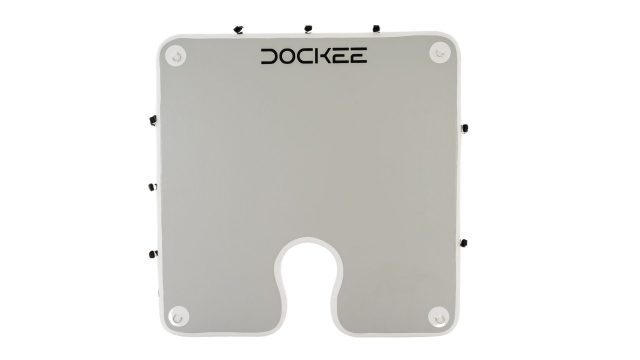
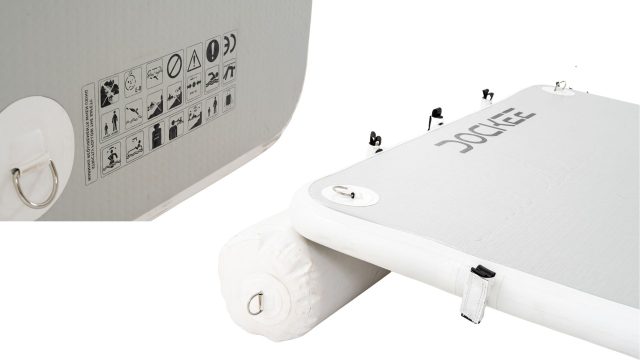
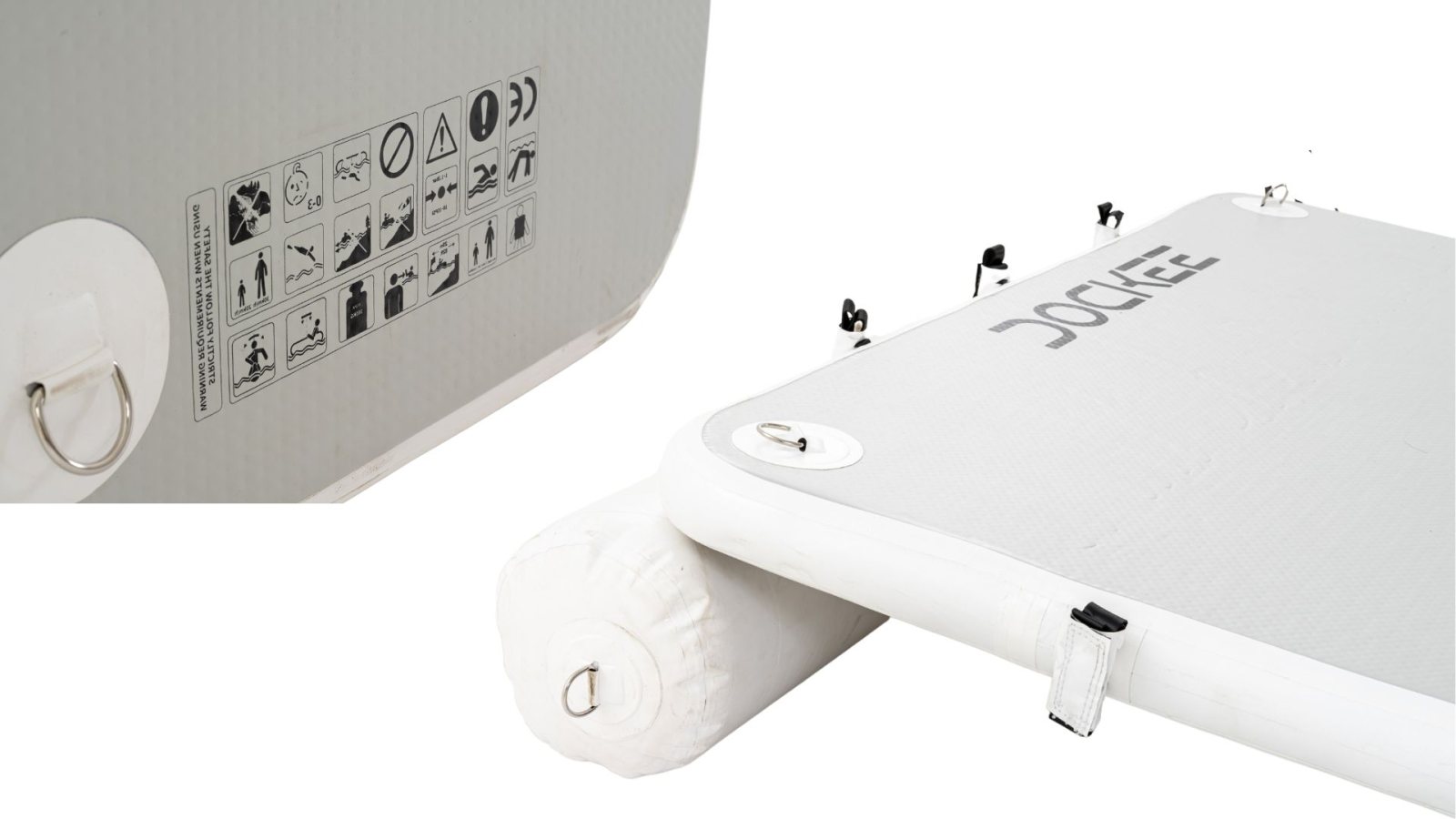
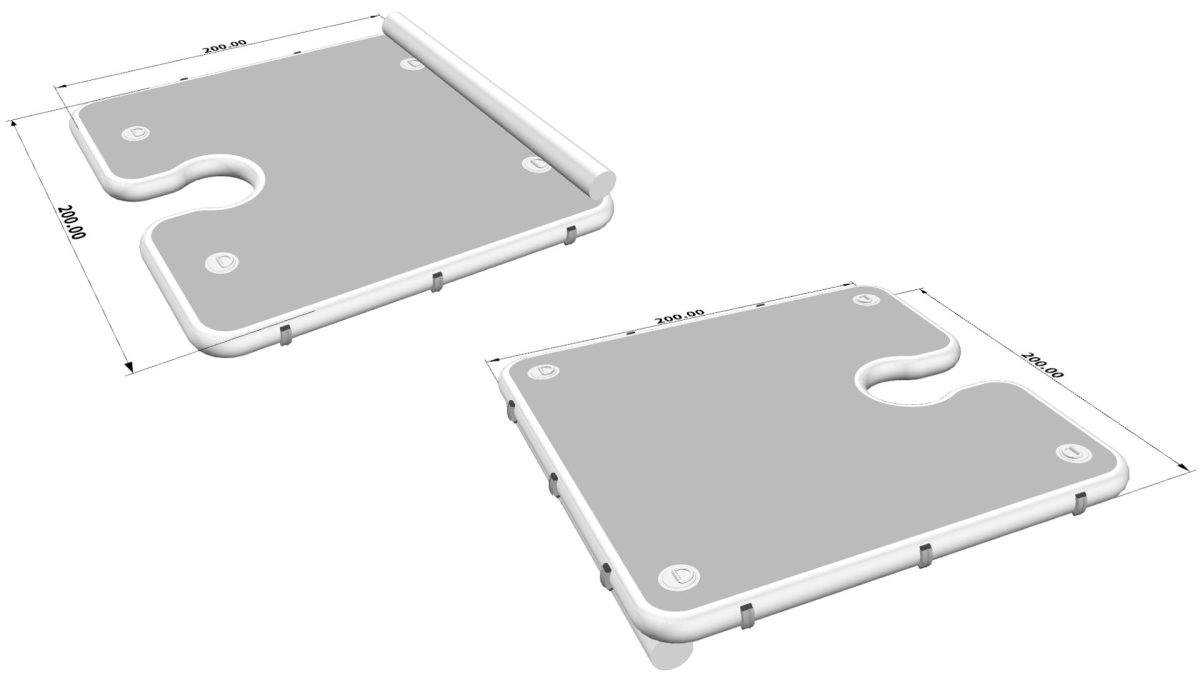
The E-Foil Ramp is where every session starts and ends. It measures 200 by 200 cm with a gently inclined, non-slip surface, so a guest can kneel on the board on the ramp, slide off into the water and come back up the same way without scraping the board on a platform edge. The surface is textured, so there is no extra deck pad to fit, lose or replace.
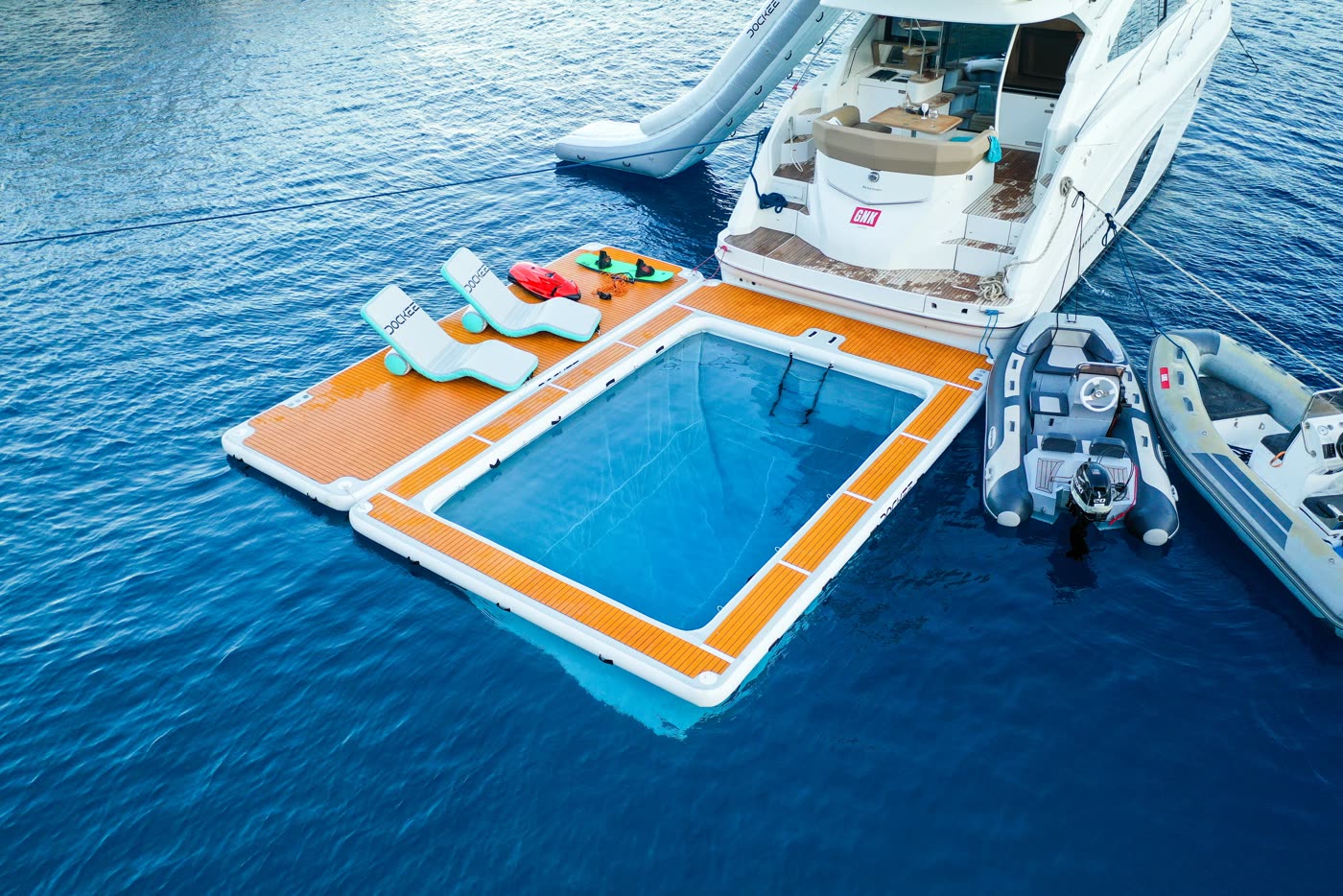
For the launch, a crew member steadies the board while the guest kneels, then eases it forward until it floats. Coming back, the guest approaches at the lowest speed, aims for the middle of the ramp and releases the trigger before the nose touches, letting the board glide up. The guest stays kneeling until the crew member on the ramp has hold of the board.
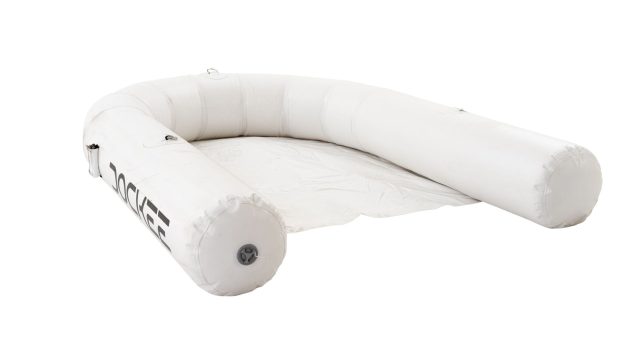
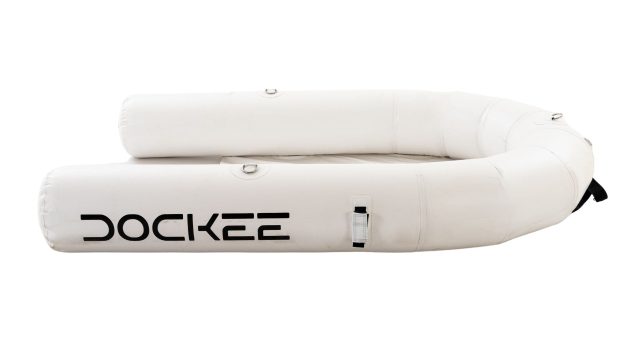
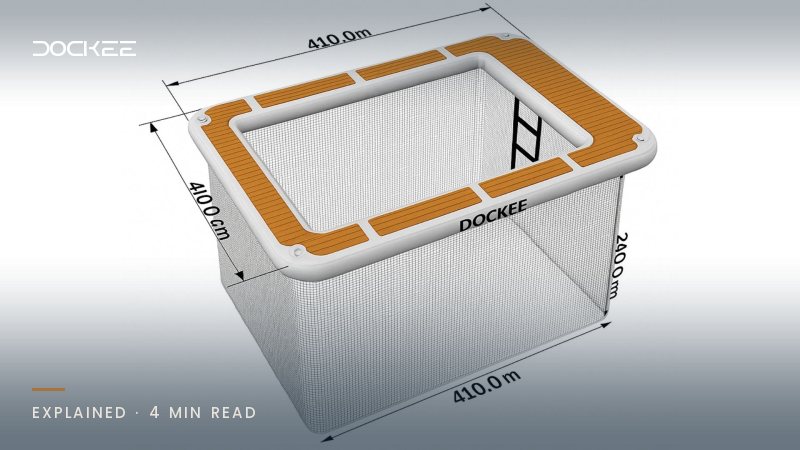
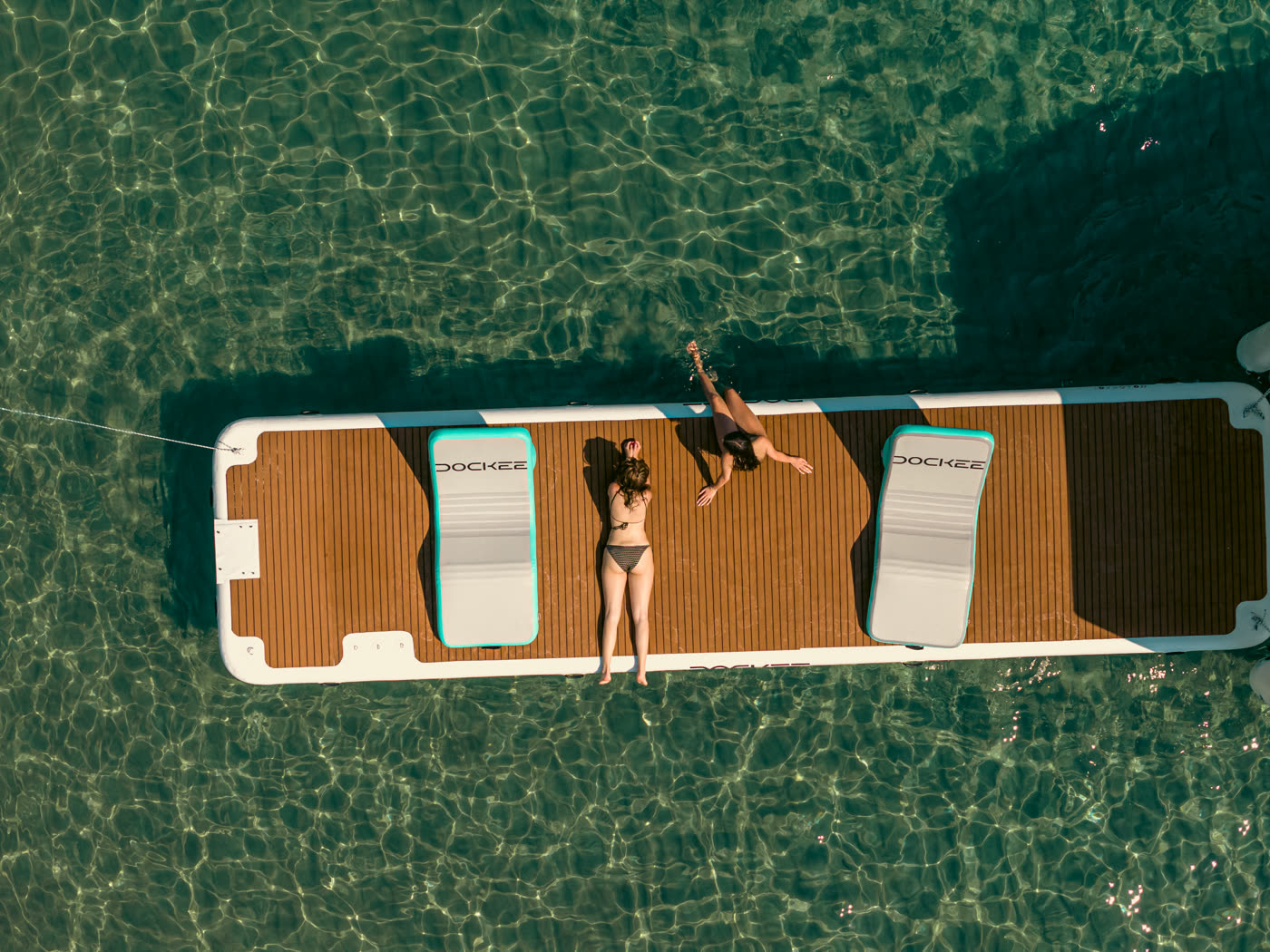
The ramp connects to Dockee platforms, and a Premium Teak Platform 4.10 m, 410 by 205 cm, gives the next rider and the crew a steady place to wait beside it. Between rides the board needs its own space away from swimmers; a C-Dock, 200 by 150 cm inflated, keeps an e-foil, a Seabob or a jet ski secure behind the yacht. The ramp itself is in our toy docks collection. Whatever is running on the water, the yacht's own engines and thrusters stay off while riders or swimmers are in it, and children on the platform are supervised throughout.