Late season in the Mediterranean brings a welcome change of pace. The anchorages grow quiet, the sea remains warm, and charter guests enjoy a relaxed schedule. However, keeping water toys accessible yet secure still requires a methodical approach. When you manage high-tech equipment alongside the yacht, the right jet ski docking solutions and clear procedures help prevent unnecessary damage. E-foils and Seabobs require specific handling to protect their sensitive components from impacts against the transom. This guide outlines the precise checks to perform before you launch and secure your equipment.
A well-prepared stern area gives the crew a solid foundation for managing heavy equipment. Review this checklist before deploying your platforms and docks:
- Assess the environment: ensure you are in calm, sheltered water before setting up any inflatable dock, and bring products in when wind and waves build up.
- Secure the area: turn engines and thrusters off while anyone is in the water near the stern.
- Verify power and inflation: unfold the product on a clean surface free of sharp objects. Connect the 230 V Air Pump 1200 W and inflate your platforms to the pressure stated in the product instructions.
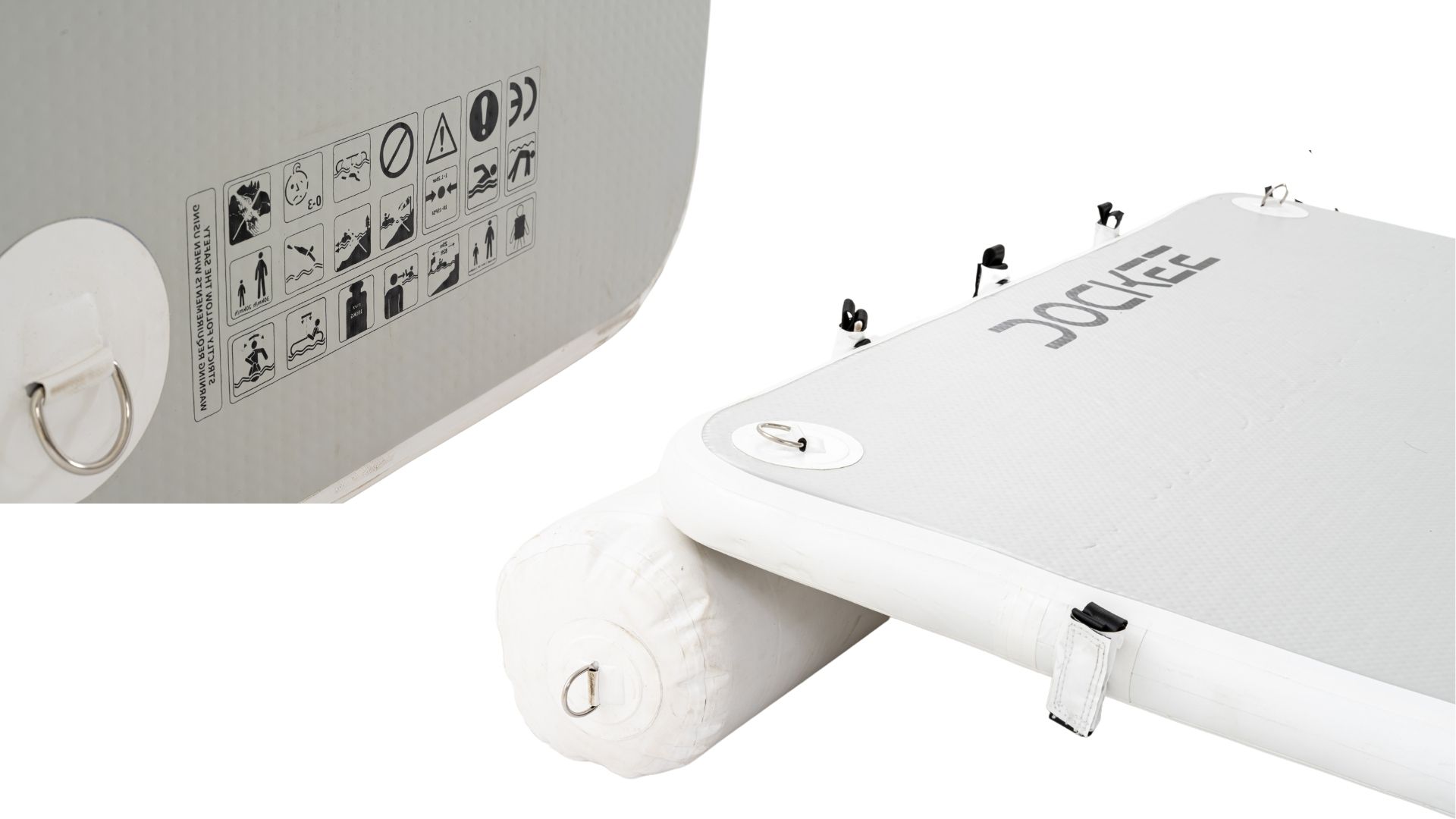
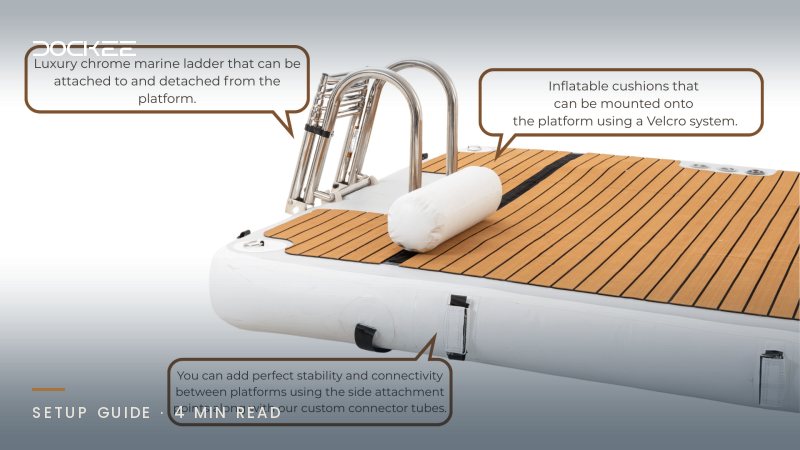
- Check the connections: if joining multiple units, inflate the AirLink Tube until rigid, slide it into the connection loops, and fasten it with the integrated straps so nothing shifts.
- Inspect the top layer: verify the teak-look surface is clean. It is a teak look only, not real wood, and it needs no oiling or sanding.
- Tie lines safely: tie lines only to strong, suitable fixing points on the yacht and keep them clear of propellers.
- Monitor pressures: air expands as it warms, so check the pressure again on hot, sunny days using a pressure gauge.
- Establish oversight: always supervise swimmers, especially children, when they are near the docks and toys.
Deploying an E-Foil Ramp and Seabob Dock
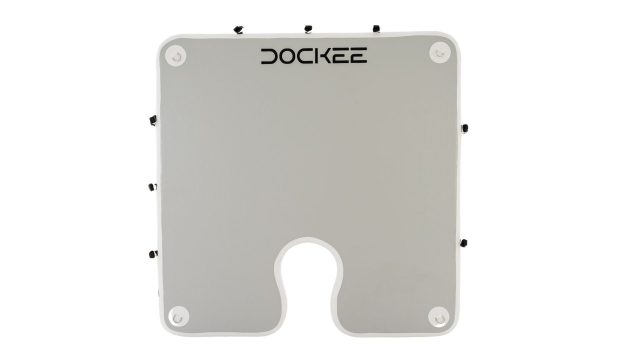
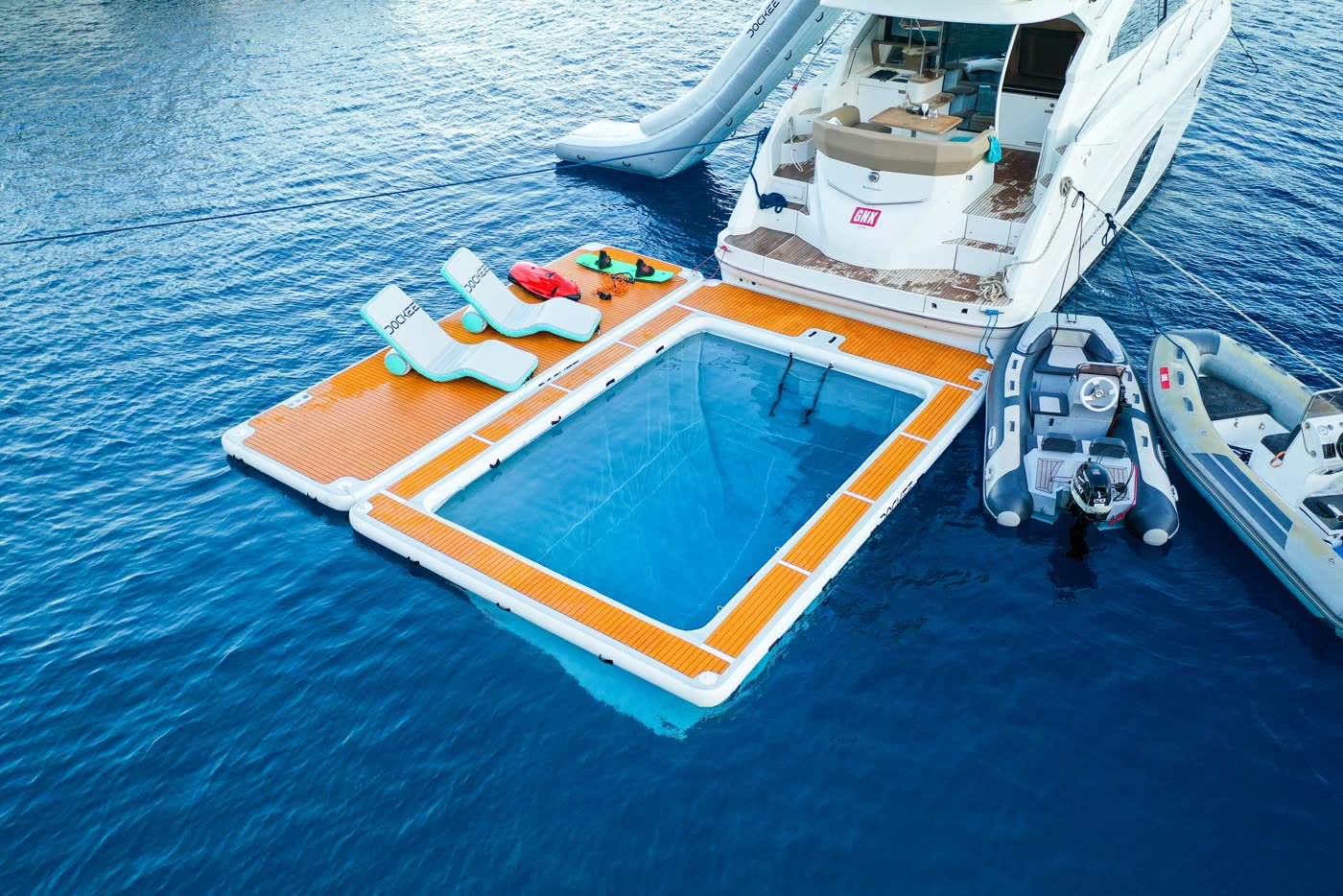
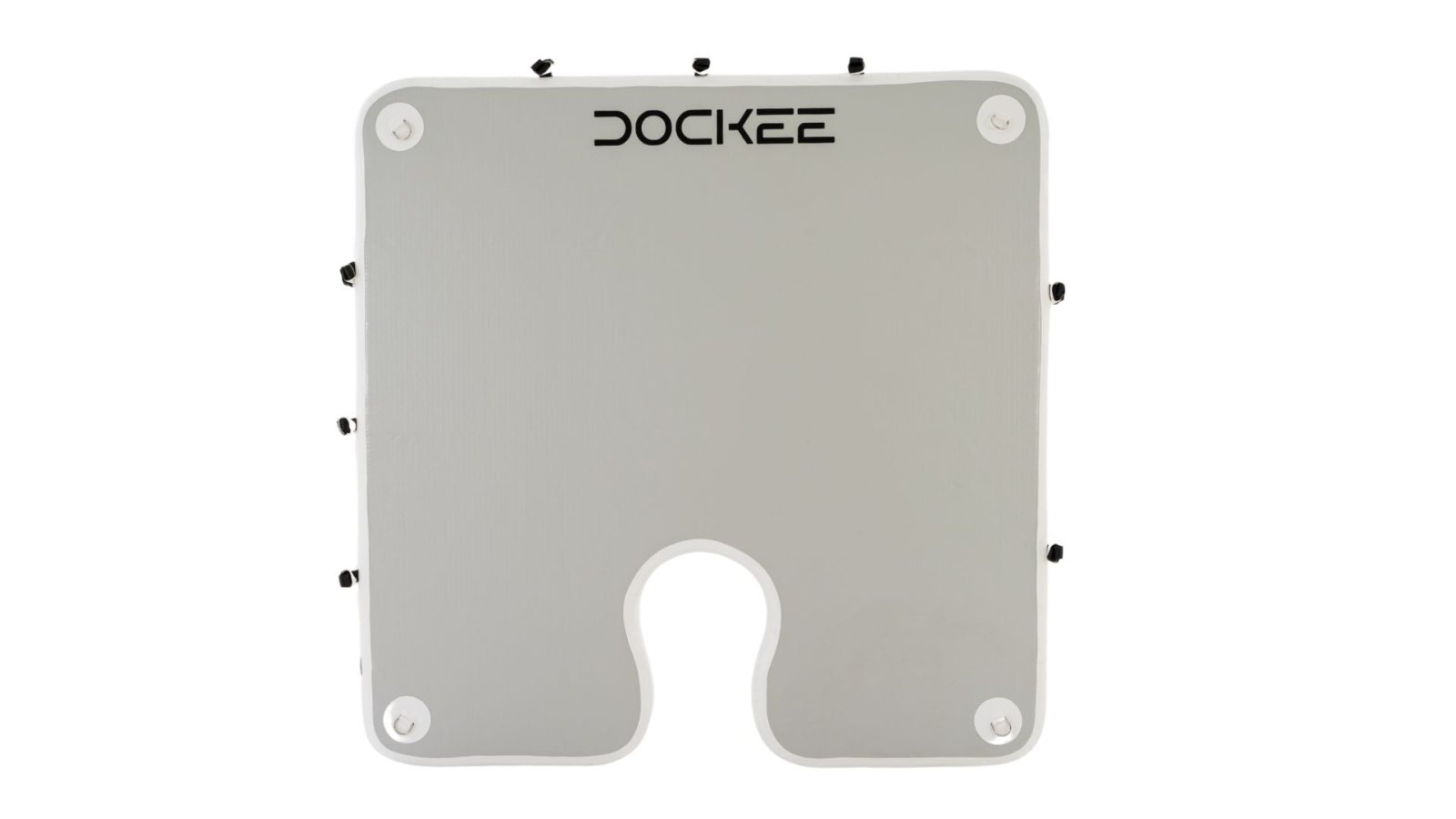
Once the area is safe, you can position the specific docks designed for your equipment. A dedicated Seabob dock gives the crew a defined space to park underwater scooters, keeping them separated from the main swimming area. The C-Dock for Jet Ski & Seabob provides a compact footprint of 200 x 150 cm. It is built from drop-stitch fabric with reinforced PVC: a dense array of internal threads holds both surfaces parallel, keeping the dock flat and firm. The crew can slide the scooter into place securely, avoiding potential impacts with the yacht hull.
Electric hydrofoil boards call for a different approach. Their delicate underwater wings need a smooth transition in and out of the water. The E-Foil Ramp measures 200 x 200 cm and features a plain textured, non-slip surface instead of the teak look. Connecting these specific docks to your main floating platform creates an organised water sports centre. You can connect the E-Foil Ramp and the C-Dock side by side with an AirLink Tube. This arrangement gives each toy its own place and keeps the deck clear of clutter.
Expanding Your Jet Ski Docking Solutions
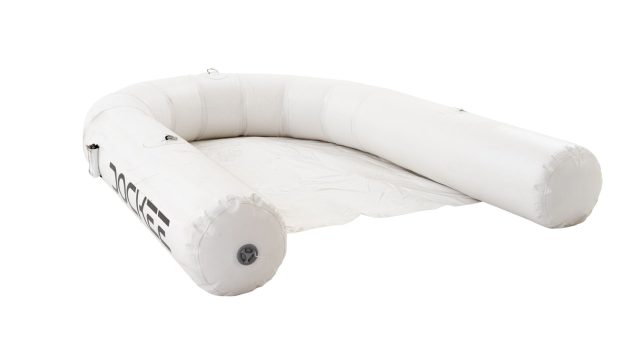
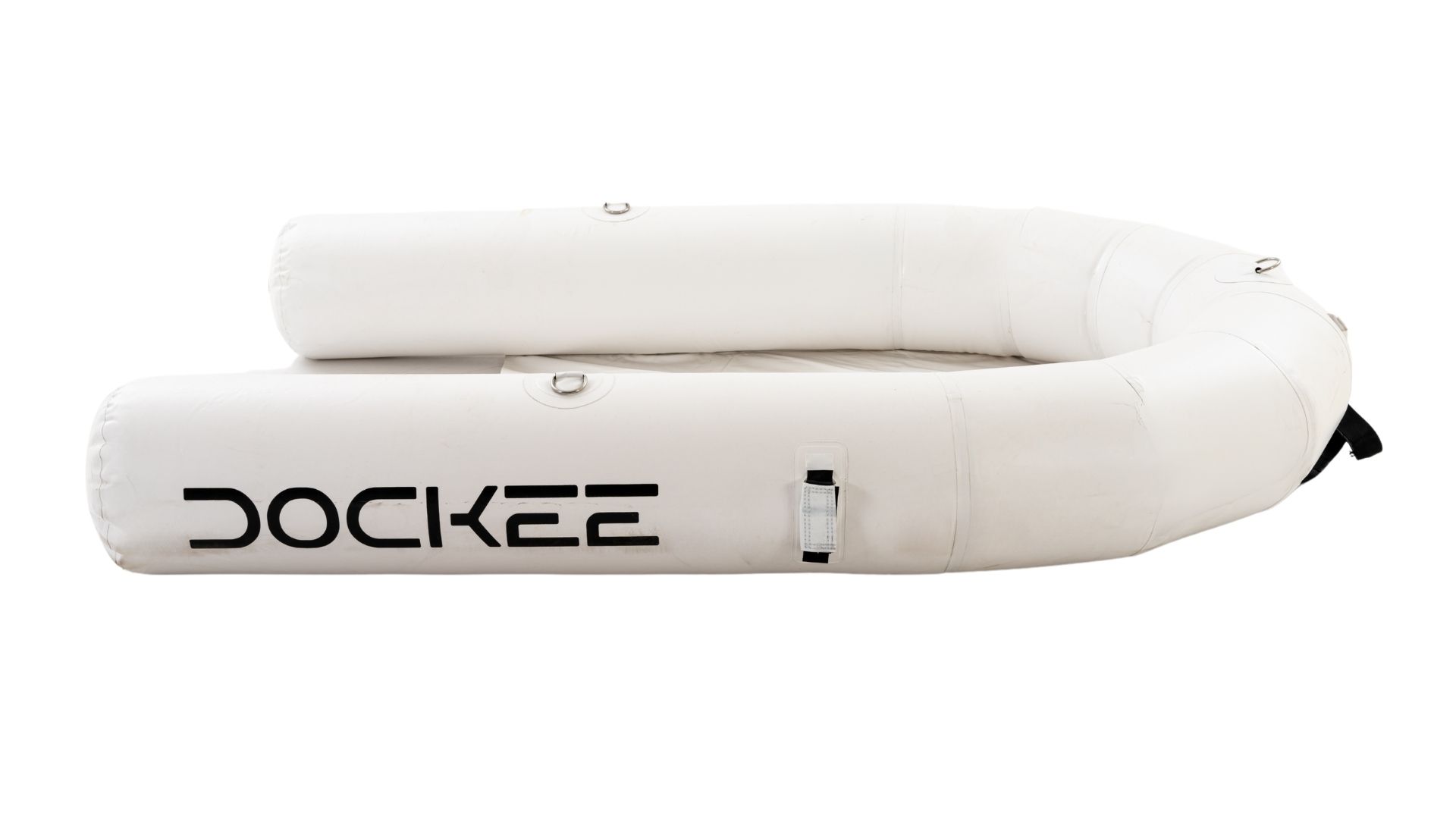
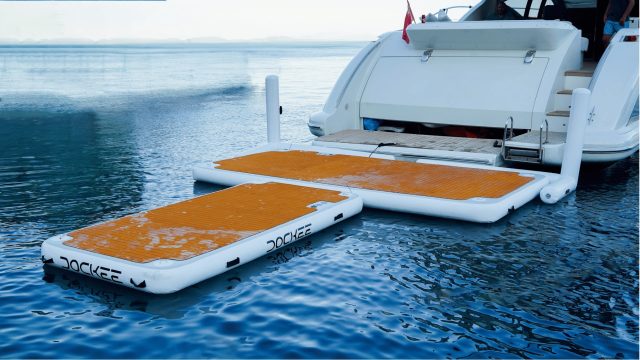
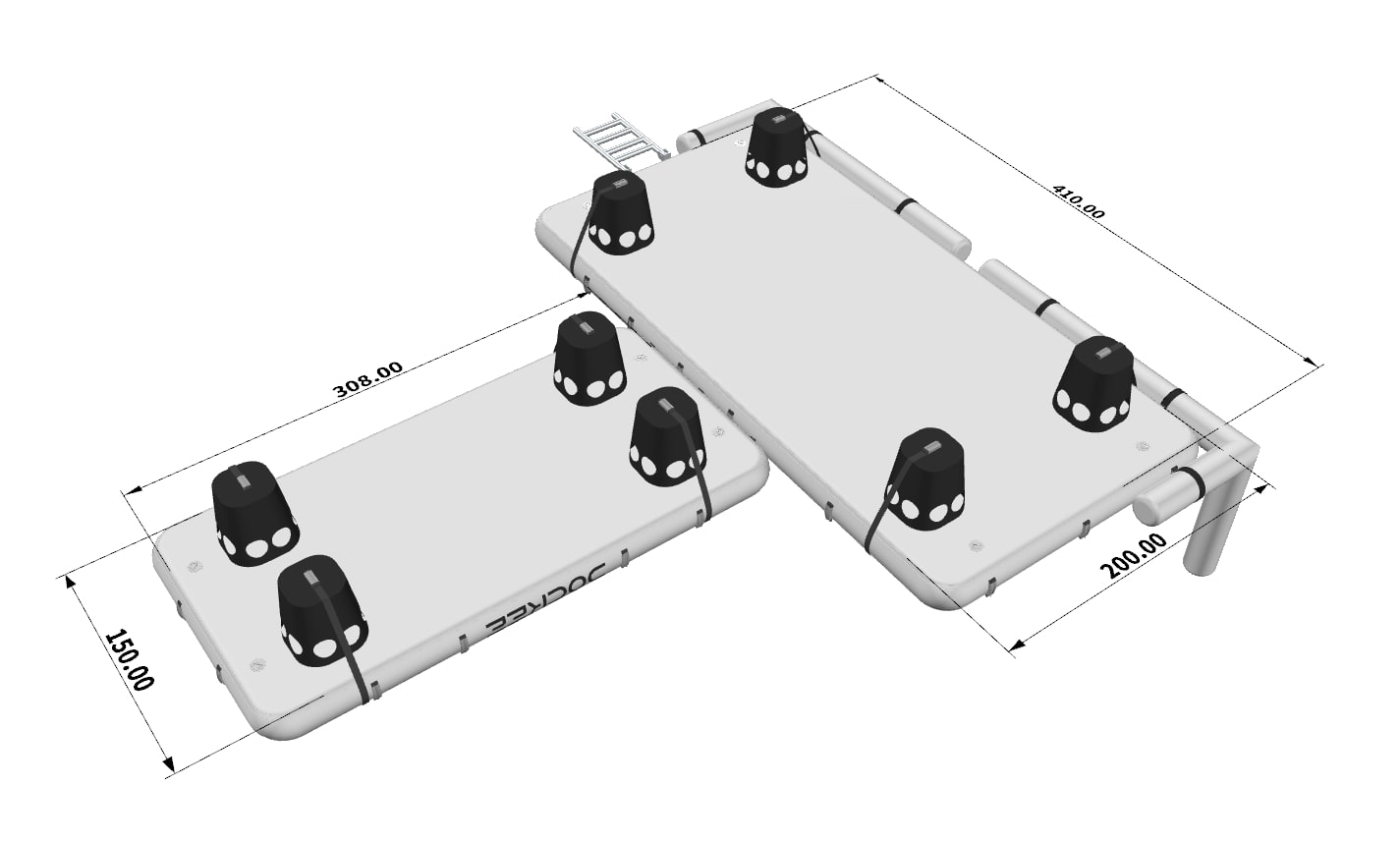
When a charter involves multiple jet skis and larger toys, a compact dock may not be enough. For a larger fleet, consider the Double Toy Dock (3.10 + 4.10 m), which consists of two modules measuring 410 x 205 cm and 308 x 155 cm. It holds up to two jet skis, featuring divided arms that keep them apart and secure. Using the correct toy docks helps prevent heavy items from colliding with each other or the yacht.
All Dockee platforms, pools and docks use 0.9 mm PVC combined with drop-stitch fabric, and the materials are chosen to be UV-resistant and saltwater-resistant. They spend long hours in direct sun, so choosing products built for the marine environment reduces the burden on your crew. Should your yacht have specific transom dimensions, a tailor-made size or configuration can be requested, with an individual quote for each project, so your docking setup matches the space available on the water.
Protecting Your Water Toys Before Winter Storage
As the late season in the Mediterranean draws to a close, thoughts naturally turn to packing away the equipment for the winter. Careful handling now prevents delays when the yacht prepares for next spring. Begin by bringing the docks on board and rinsing them thoroughly with fresh water after contact with salt water. Clean the fabrics with a mild soap solution to remove any residue left by a season in warm water.
Give the teak-look surfaces a regular, gentle clean to maintain their appearance over the winter months. Before you open the valve to deflate the drop-stitch platforms, ensure they are completely dry. Storing your docks wet can degrade the material and lead to unpleasant surprises next season. Once fully dry, fold them neatly and pack them away. Keep all inflatables and covers stored dry and out of prolonged direct sunlight. A careful storage routine means your products will unroll next spring exactly the way you left them, ready for another busy charter season.