By mid-morning the lagoon has turned the pale, almost milky blue that only appears over white sand, and the reef edge is a darker line a short swim away. The yacht lies quietly to her anchor in the middle of it, the flag barely moving. That is the image guests take home from a Maldives yacht charter in the northern winter, and it is a fair one. It leaves out how much of the day is shaped by the reef edge, the strength of the light and the question of where guests can swim without brushing past things they would rather not meet.
Lagoon water and coral edges
The atolls are rings of reef, and the anchorages inside them are often shallow, clear and sheltered from the ocean swell. That shelter is exactly what floating gear needs: calm water, little chop and room to lay things out behind the stern. The responsibility that comes with it is the coral. Anchor on clear sand, well away from coral heads, and ask your skipper or local operator about the rules for each atoll and resort area before the trip, because they differ from place to place.
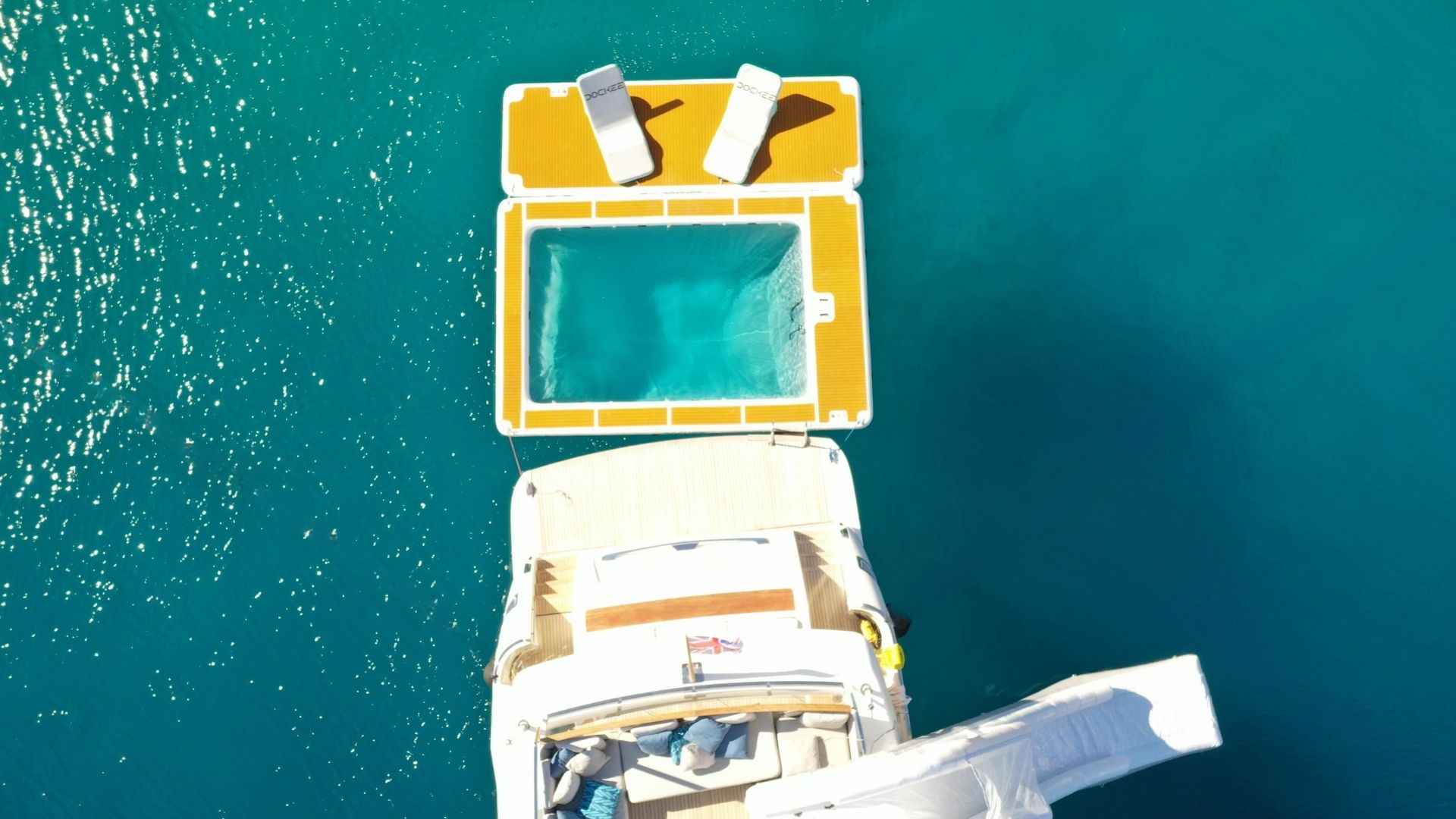
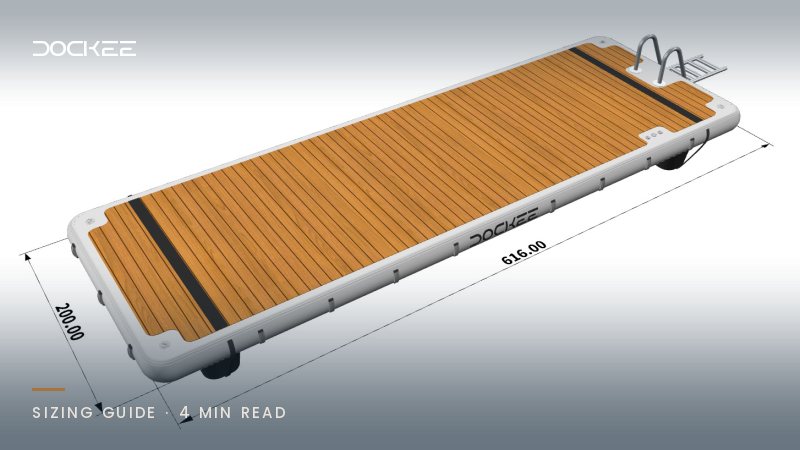
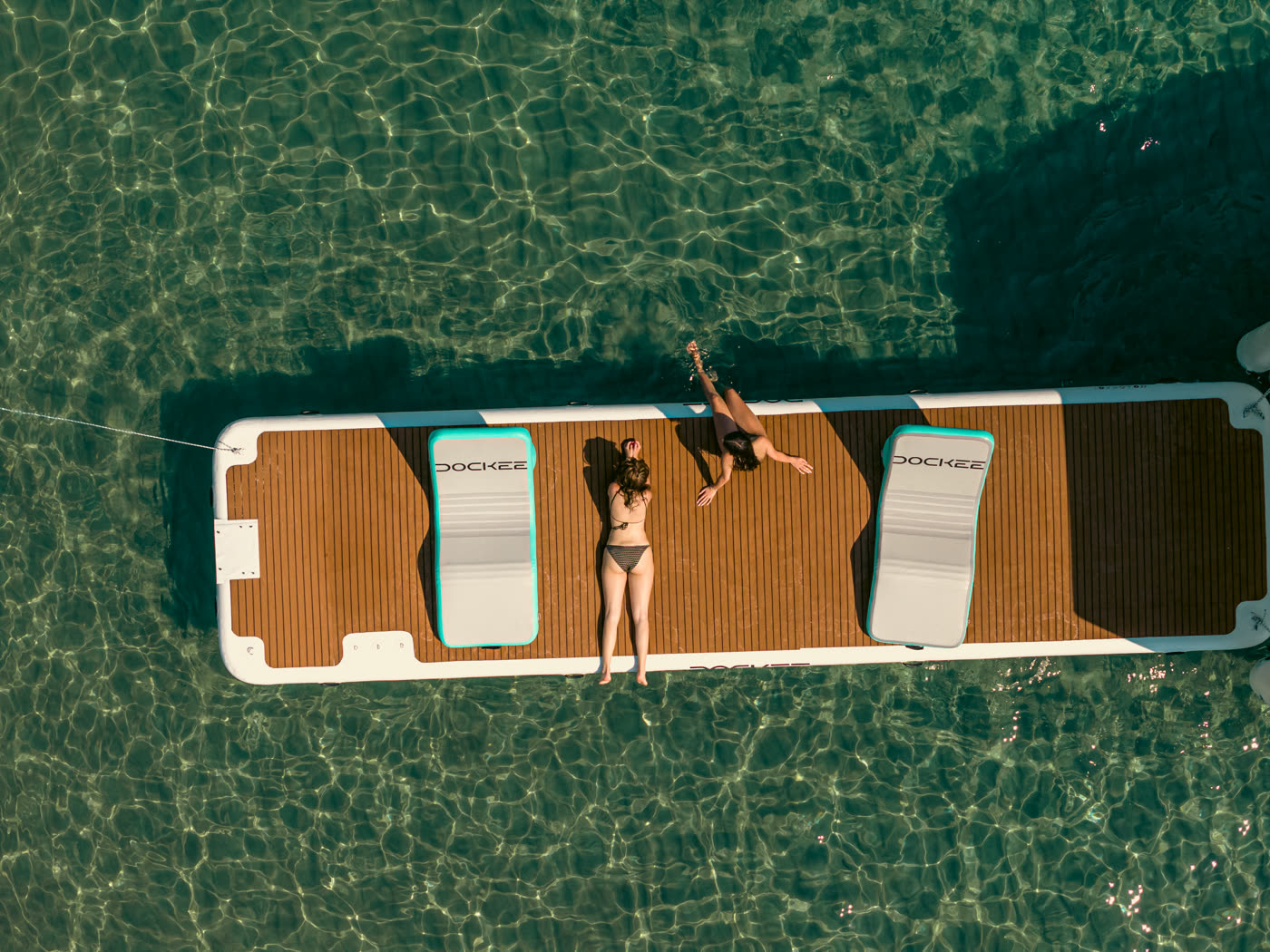
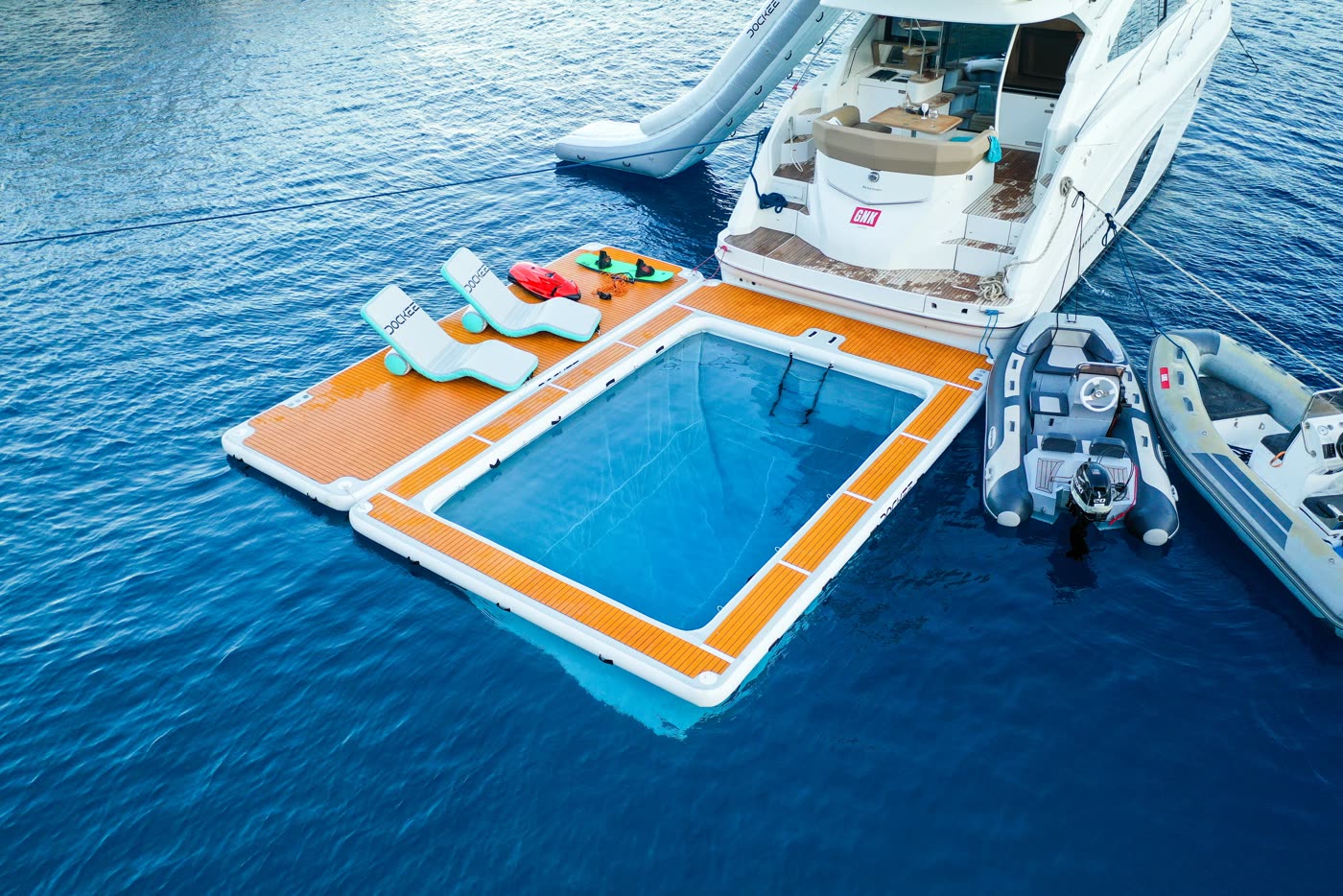
The same care applies to everything that goes over the side. A floating deck tied off behind the yacht should lie over sand, on lines short enough that it cannot swing towards the reef when the breeze shifts in the afternoon. A Premium Teak Platform 4.10 m gives a 410 x 205 cm deck at water level, and in the Maldives every snorkelling trip soon starts and ends on it. Guests sit on the edge to pull on fins, slip in without a jump, swim out to the reef and come back to something flat and steady to climb onto.
A pool inside the lagoon
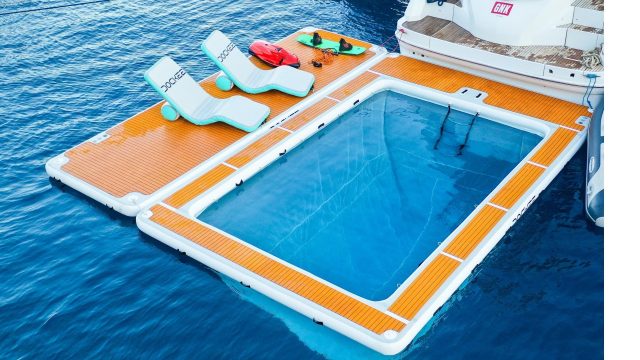
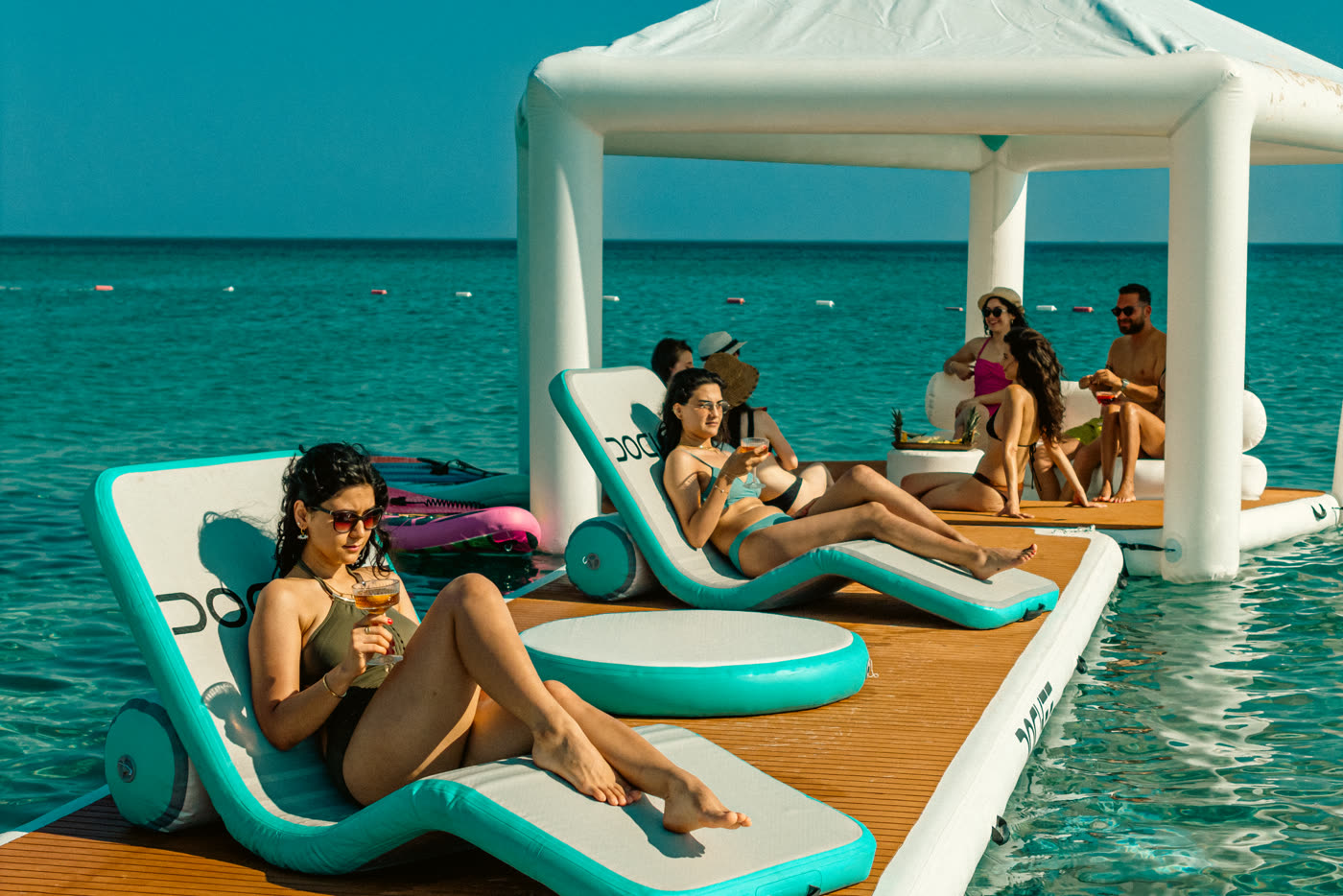
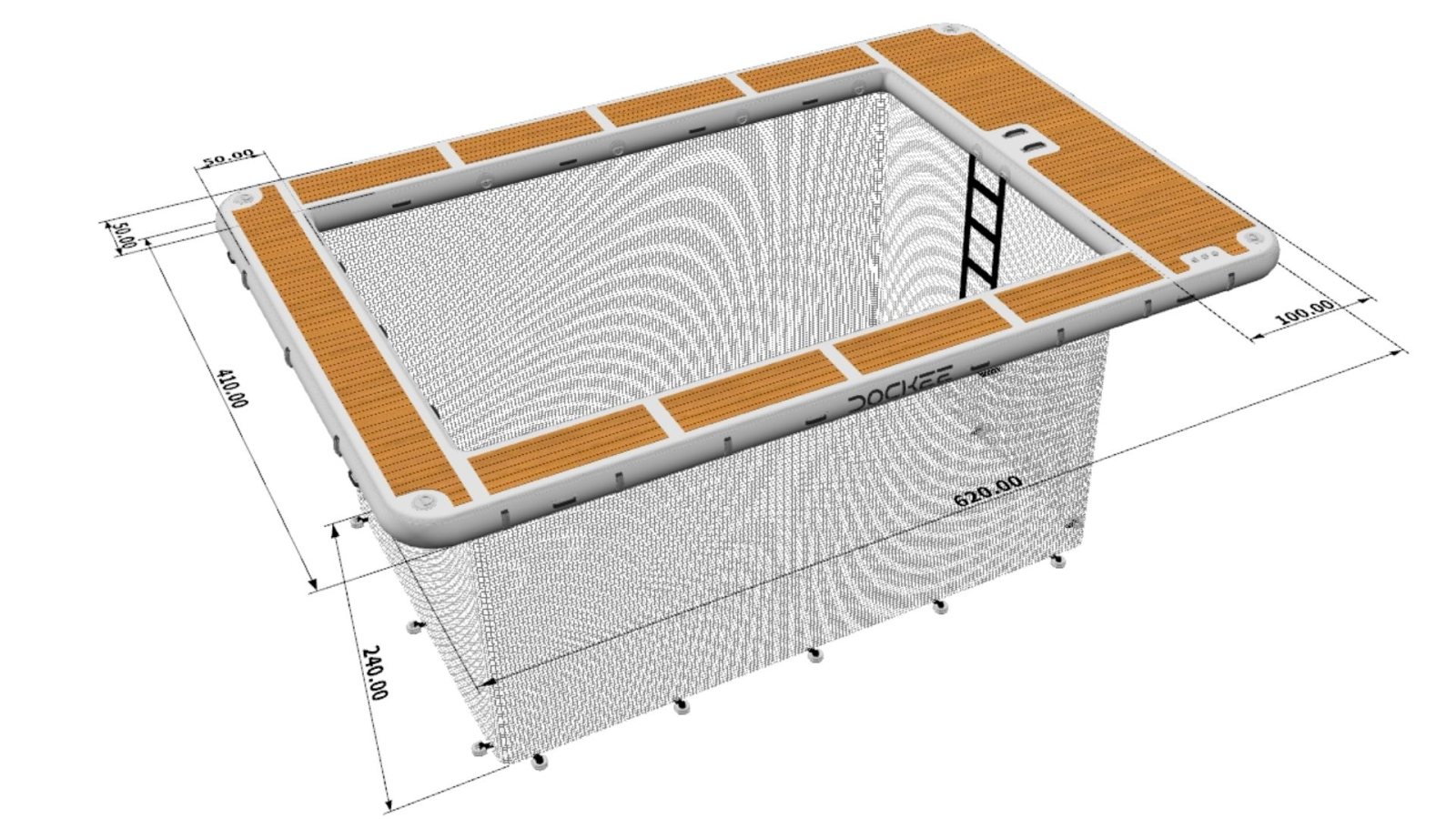
Not every guest wants the reef. Some want the warm, clear water without a curious fish, a drifting jellyfish or a strand of weed passing at eye level, and young children are better off in a defined space anyway. A netted sea pool handles that well. The Deluxe Water Pool 6.20 m measures 616 x 410 cm outside, with a fine-mesh PVC jellyfish net hanging to a depth of about 240 cm. Inside the frame the swimming area is clearly marked, and the lounging edge around it is where parents end up sitting with their feet in the water.
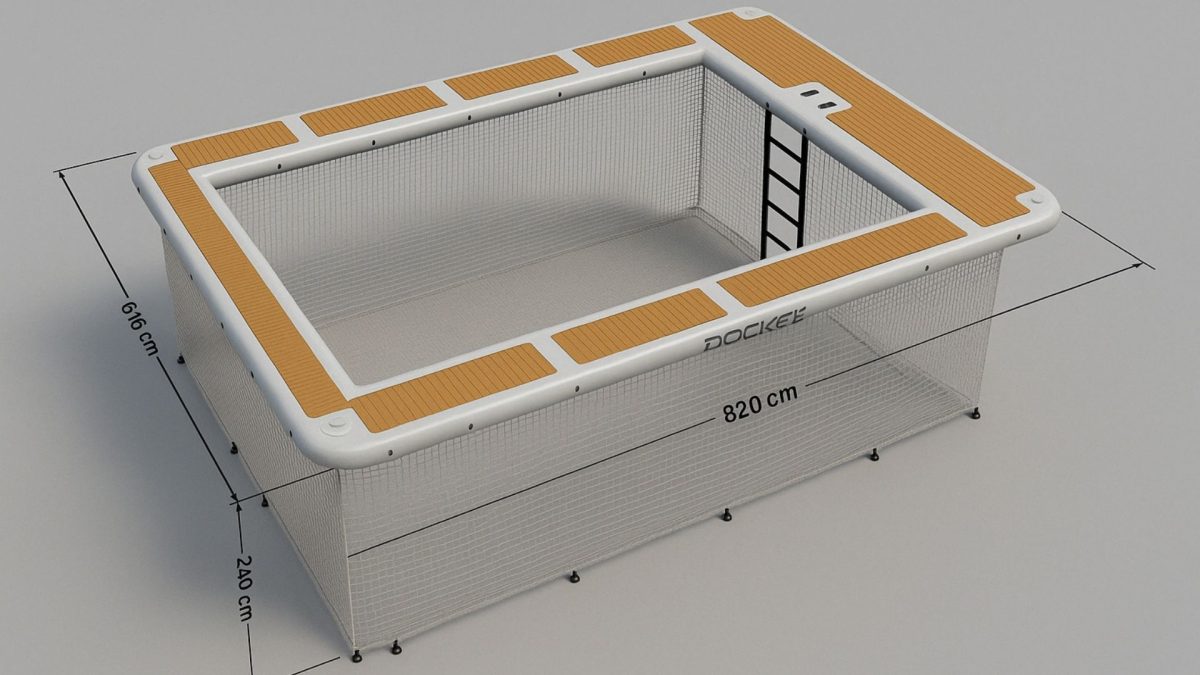
The net keeps out jellyfish, seaweed and floating debris. It is no substitute for supervision, so someone always watches the swimmers, and the tender and engines stay well clear while the pool is in use. In a lagoon the pool tends to become the social centre of the afternoon, which is worth remembering when deciding where it sits in relation to the stern and the tender route. The other sizes are listed among our yacht pools.
Caring for gear in strong light
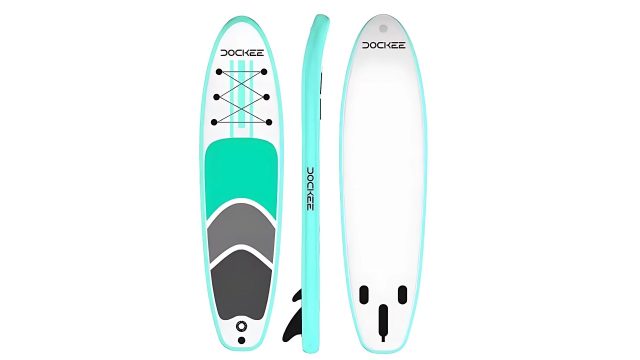
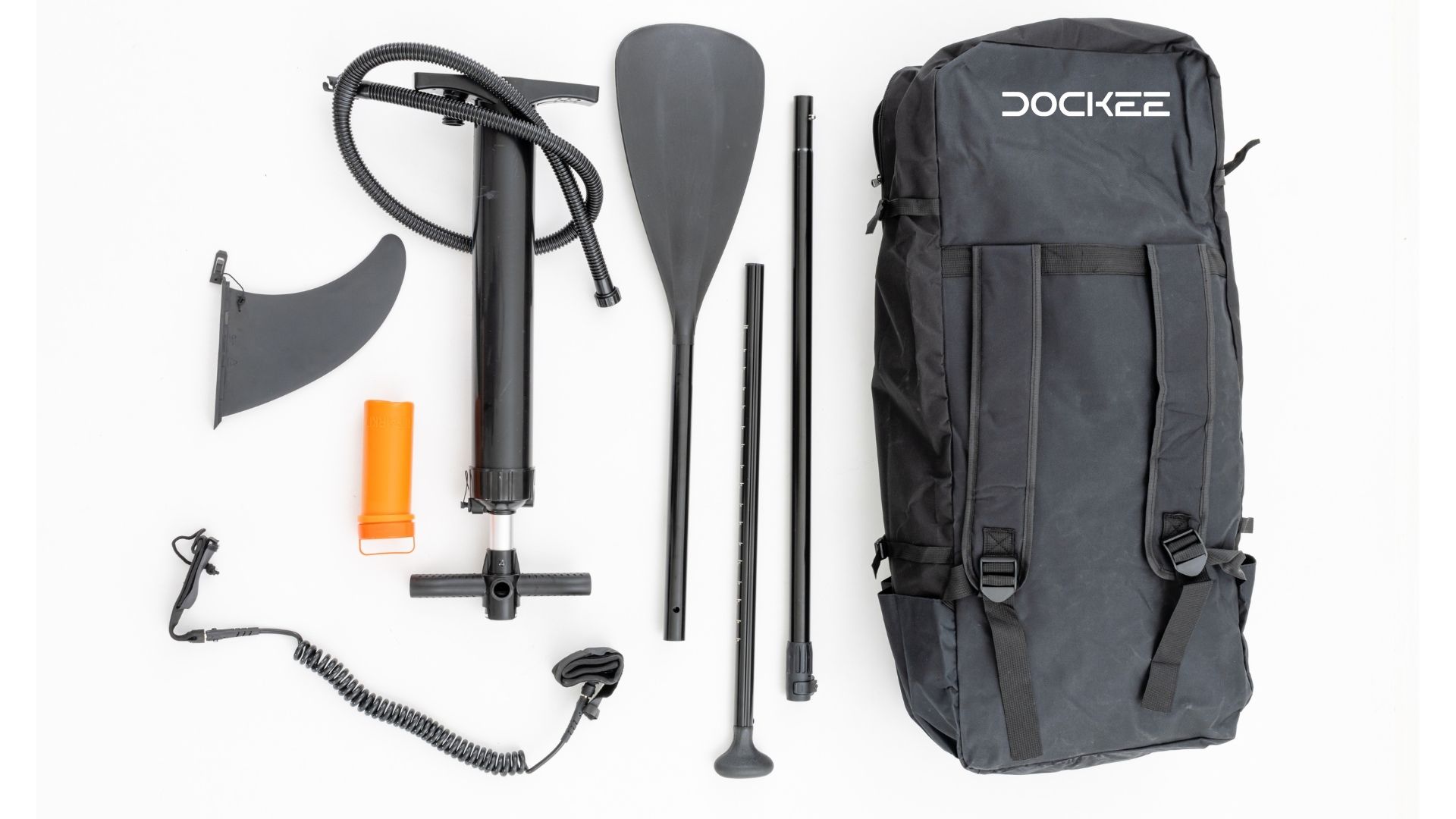
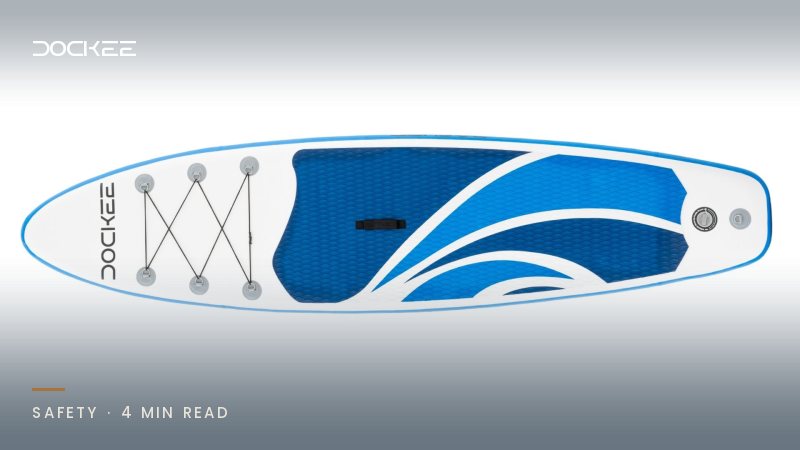
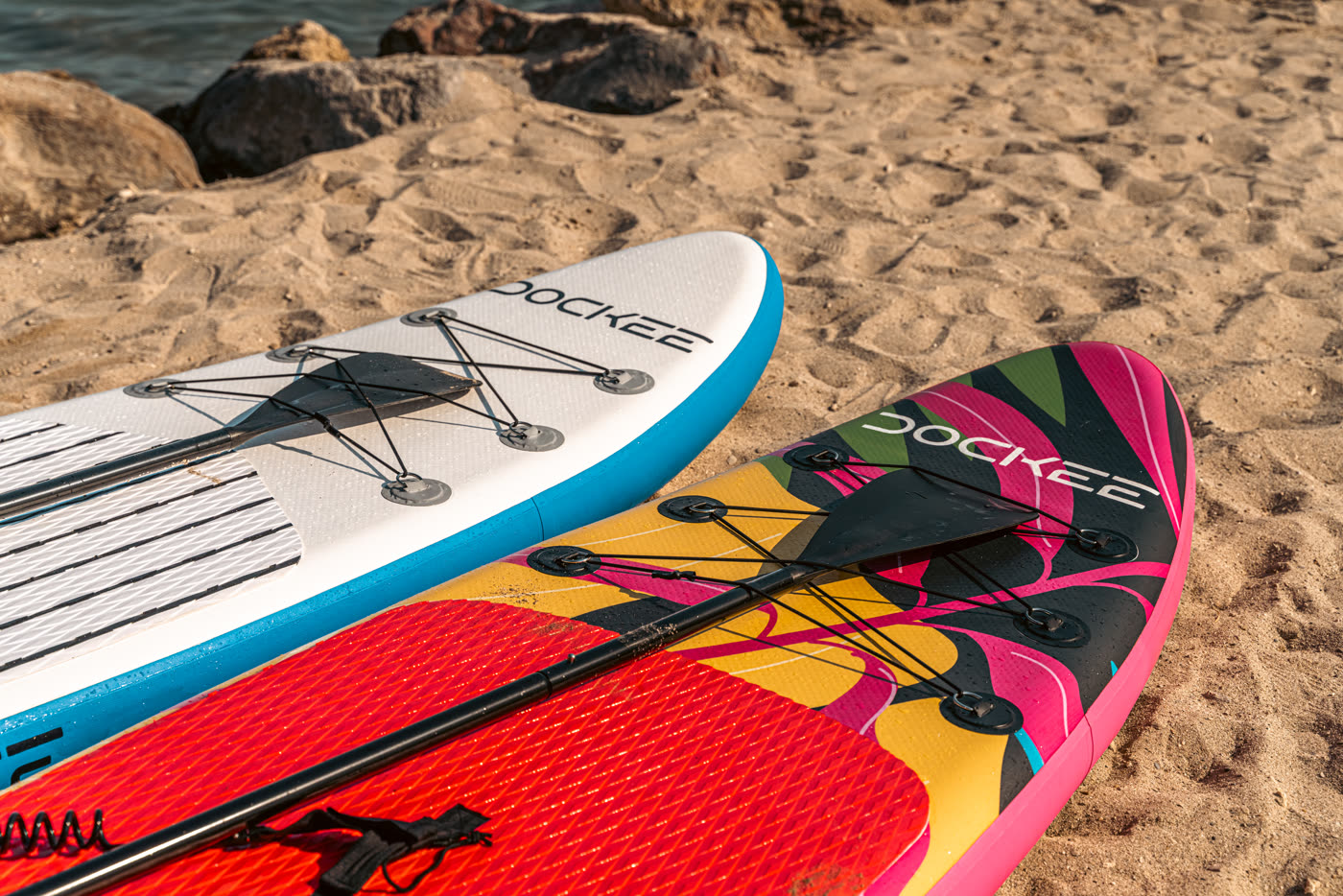
The light this close to the equator catches out first-time visitors. The best hours on the water come early and late, and a paddle board makes the most of both. A Minta 10’6” SUP Paddle Board, 320 x 80 x 15 cm, is steady enough for a slow lap of the lagoon at sunrise, looking down at the sand and the rays feeding over it, and it is back on deck before the sun climbs high.
Around midday, bring inflatables that nobody is using out of the direct sun or into the shade of the yacht. The materials are chosen to be UV- and saltwater-resistant, but nothing gains from long empty hours in tropical sunshine. Air expands as it warms, so check the pressure again on hot afternoons against the figure in the product instructions. In the evening, rinse everything with fresh water, let it dry fully and keep covers and bags out of prolonged direct sunlight. The care and storage section of our guide goes through the routine step by step.
A week in the atolls rewards a slower rhythm. Snorkel while the water is still, retreat to the pool and the shade when the heat peaks, and take the board out again once the sun drops towards the horizon. The kit only has to fit that rhythm and stay well away from the coral.