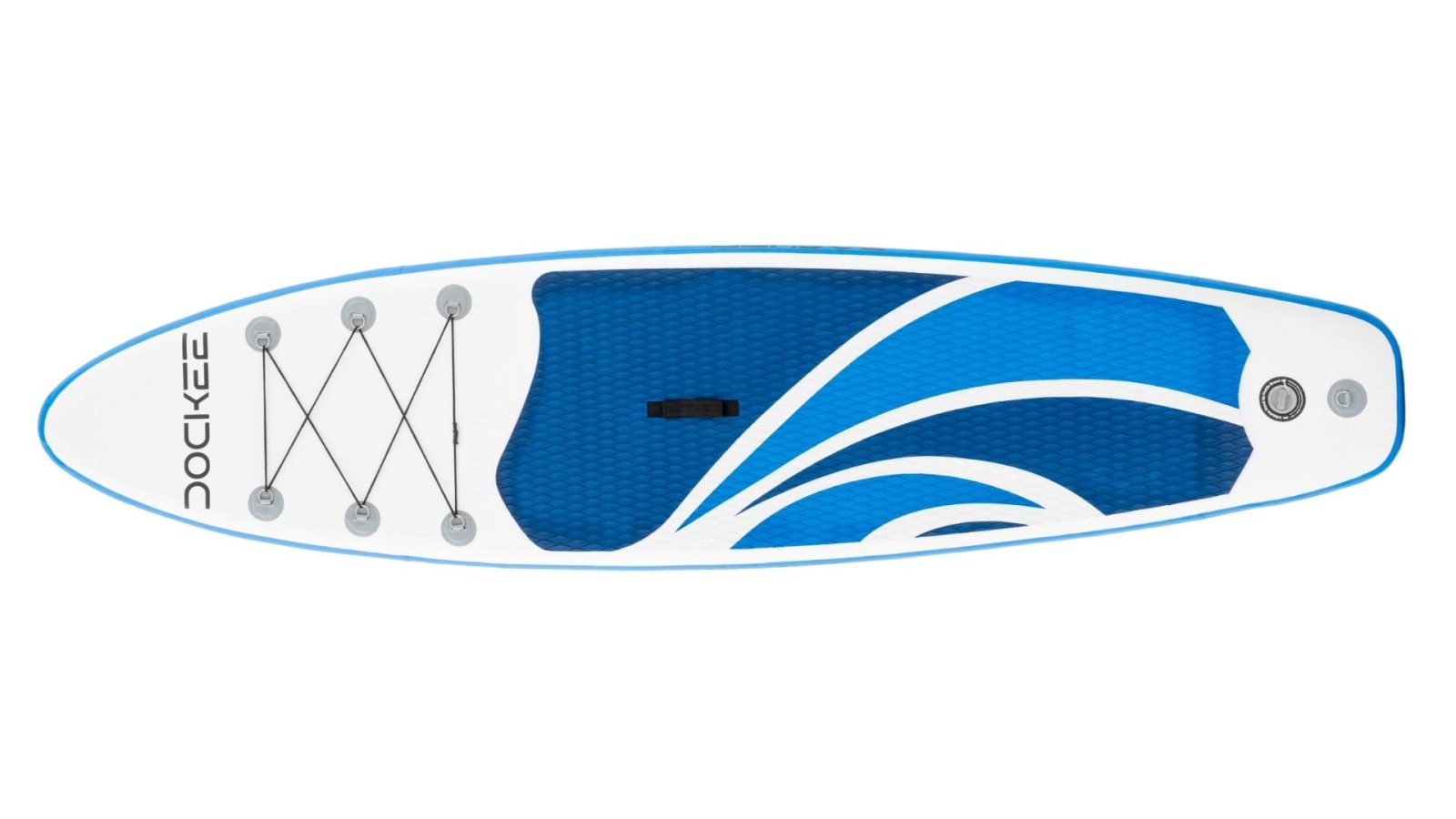
A paddle board leash is the one piece of kit every guest should wear, every time, even in a flat bay. It keeps the board within reach after a fall, and on an inflatable board that matters more than it seems from the deck, because a board with nobody on it drifts downwind faster than anyone can swim after it.
The rest of a sensible safety kit is just as simple and mostly travels on the board itself. Below is the short list we suggest, with a note on why each item earns its place, and a word on what to say before anyone paddles off.
Why the leash comes first
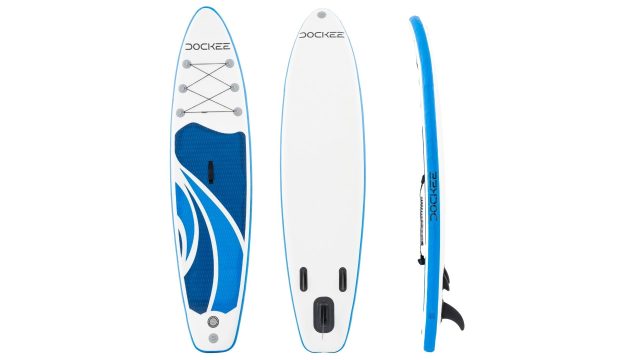
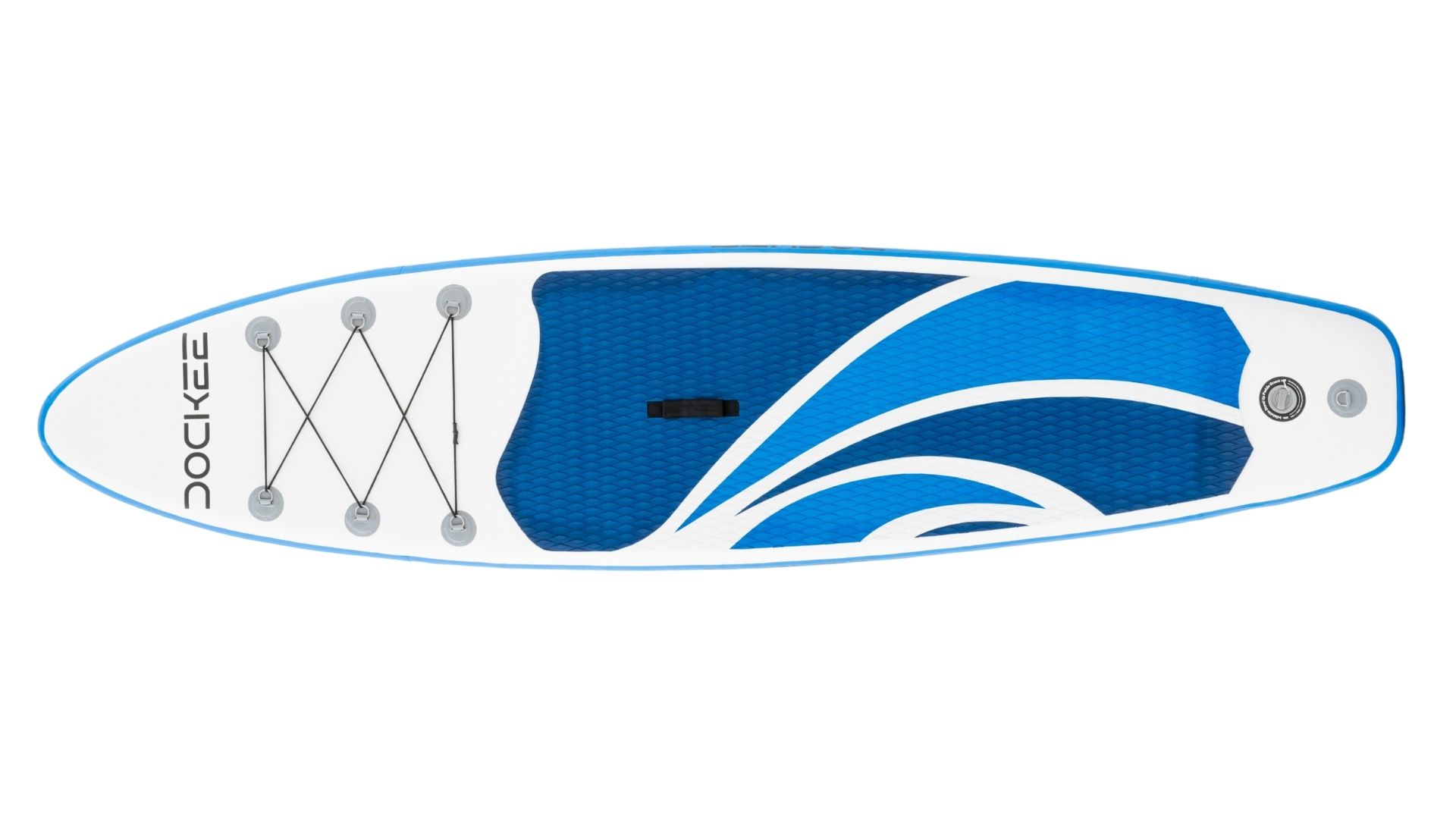
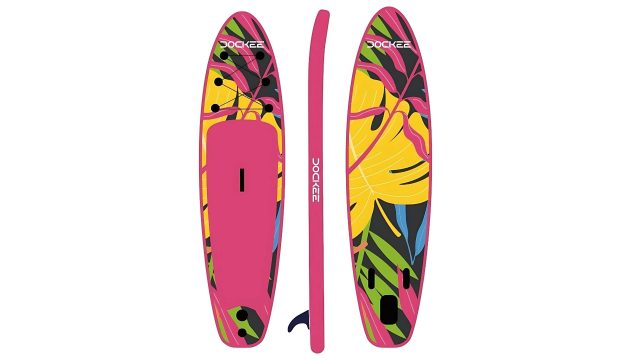
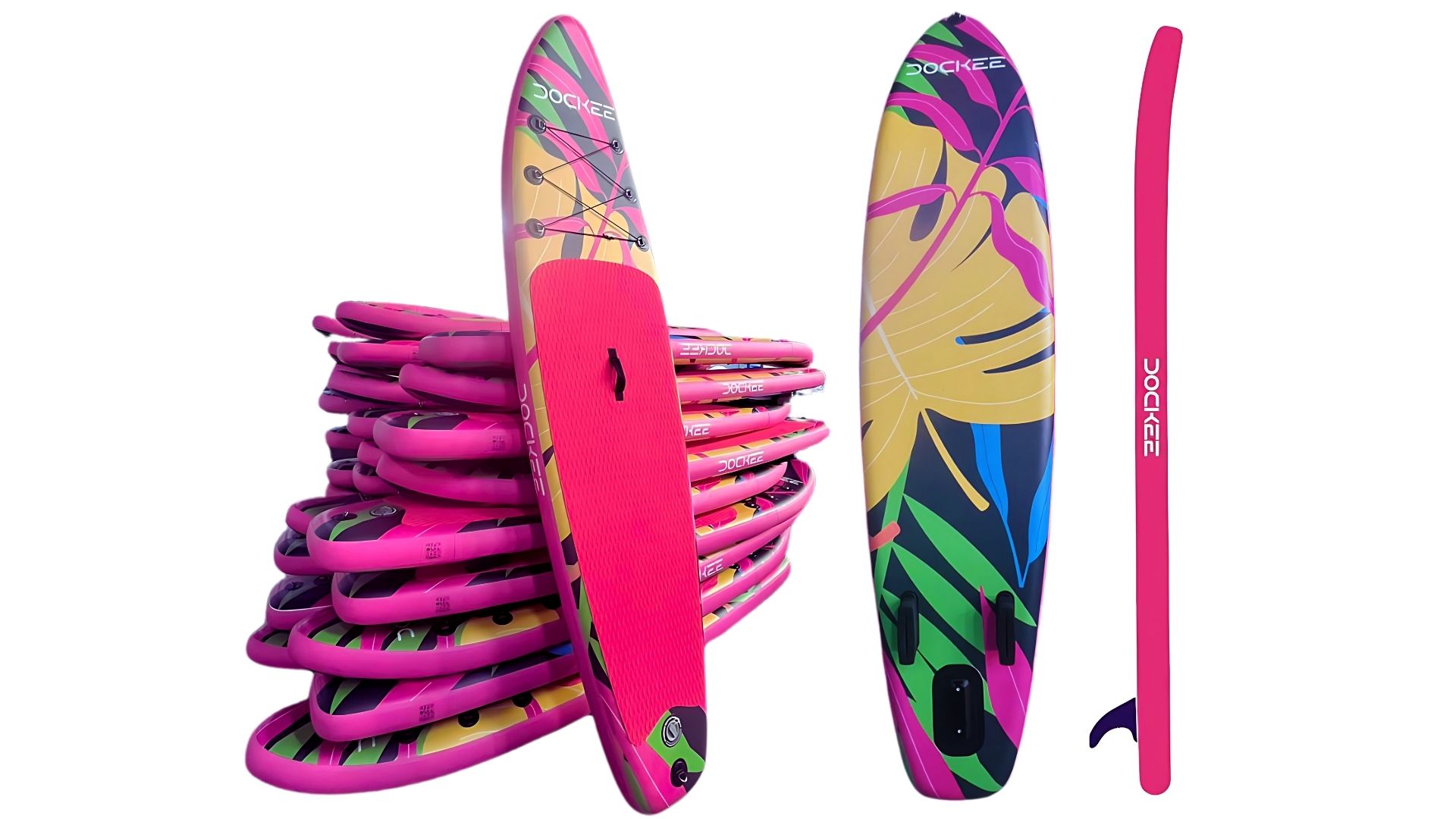
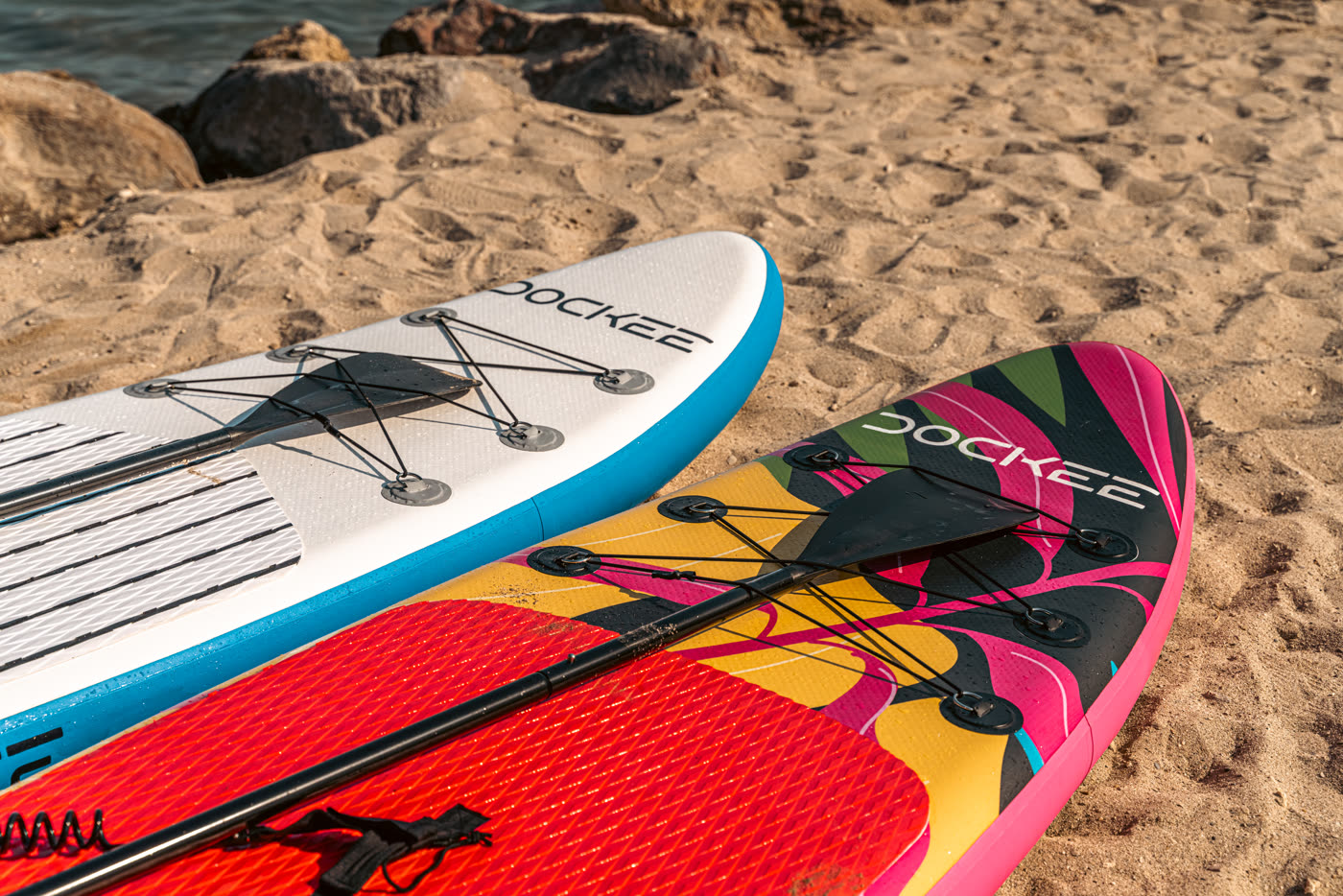
Falling off is part of stand-up paddling, or SUP, and most falls are harmless. The trouble is what happens next. An inflatable board sits high and light on the water: the Vento 10’6” SUP Paddle Board and the Luna 10’6” SUP Paddle Board weigh about 11 kg each, and in a light breeze a board without a rider slides away while the paddler is still coming up for air. Without a leash, the guest is now a swimmer some way from the yacht, and the crew have two things to recover instead of one.
A leash removes that problem. Clipped to the board's D-ring at one end and to the paddler's ankle or calf at the other, it keeps the board a short swim away and gives the guest something large and buoyant to hold while they catch their breath. On a breezy day it turns what could be a call for the tender into a laugh and a climb back on. A coiled leash suits flat water best, as it stays out of the water and does not drag, but a straight one does the job too, as long as it is worn.
Both boards measure 320 x 80 x 15 cm, a wide and stable shape for beginners and experienced paddlers alike. Stability helps, but it does not replace the leash. Experienced paddlers fall too, usually while they are looking at the view rather than the water.
The rest of the kit
Nothing on this list is heavy, and most of it rides on the board. Lay it out on the swim platform so guests can pick it up in one go.
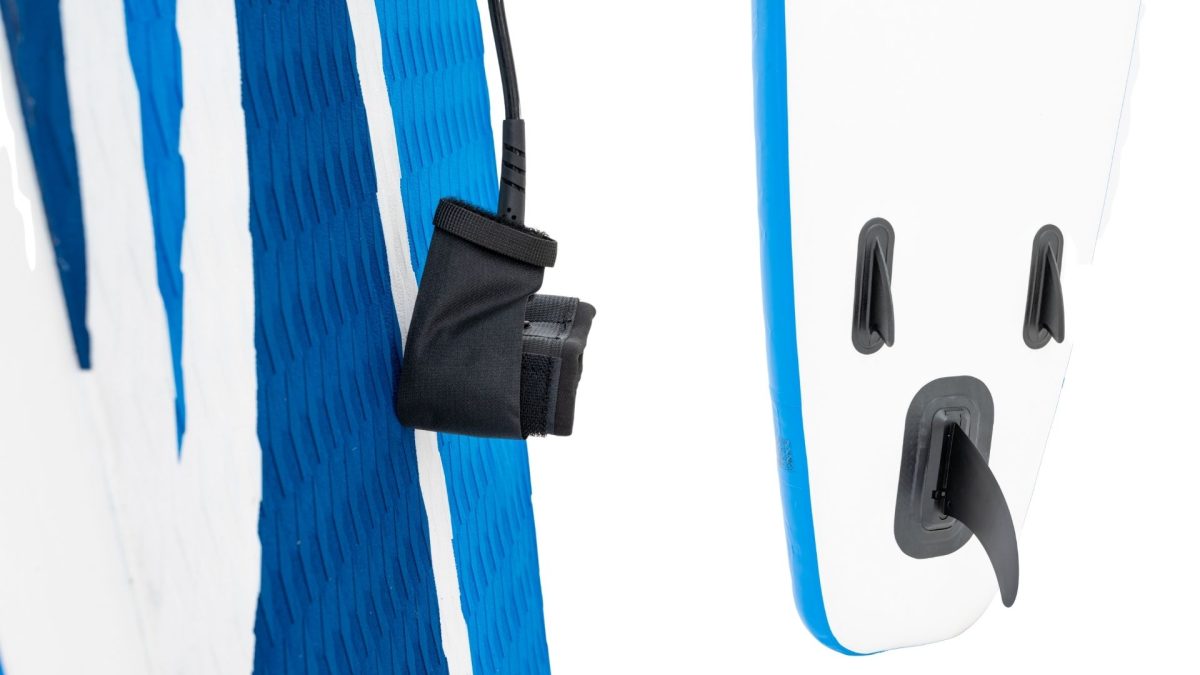
- A buoyancy aid that fits and is fastened. A loose one rides up around the ears in the water; a snug one lets a tired paddler rest.
- A whistle tied to the buoyancy aid. A shout gets lost in the wind, while a whistle carries back to the yacht.
- A phone in a waterproof dry bag, clipped to a D-ring or tucked under the front bungee, so a guest can call the yacht if they drift further than planned.
- Sun protection: a hat with a strap, sunglasses on a cord and sun cream put on before leaving. The light off the water is strong even on a cool winter day.
- Drinking water under the front bungee. A short paddle turns into a longer one more often than guests expect.
- A wetsuit, rash top or windproof layer where the water or the air is cool. Cold makes people tired, and tired paddlers fall.
- The paddle, adjusted to the right length on the swim platform rather than halfway across the bay.
Before the season, check that every leash, dry bag and buoyancy aid aboard is in good order, and keep them in one locker with the boards. If the yacht needs more boards, the full range of SUP boards is a good place to start.
A word before guests set off
The kit only works if the guest knows what it is for. A short briefing at the swim platform is worth giving every time, including to anyone who says they have paddled for years.
Point out where they may paddle and where they may not: inside the bay, upwind of the yacht at first so the way back is easy, and well clear of any tender or jet ski traffic. Agree a simple signal, such as a raised paddle, that means come and get me. Tell them the crew will keep watch from the deck, and make sure someone actually does. Engines and thrusters stay off while anyone is in the water close to the yacht, and children paddle only with an adult watching or alongside.
Keep paddling to calm, sheltered water. If the wind is building or swell is rolling into the bay, the boards stay on deck. Guests rarely argue with that call when it is made early and without fuss.