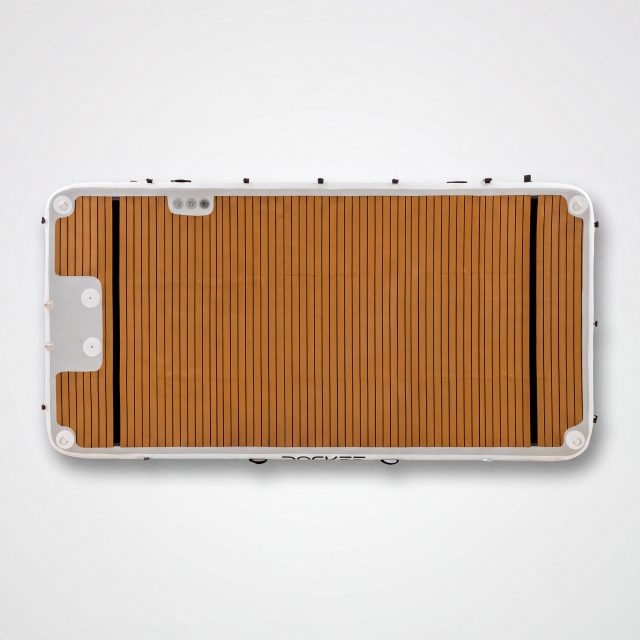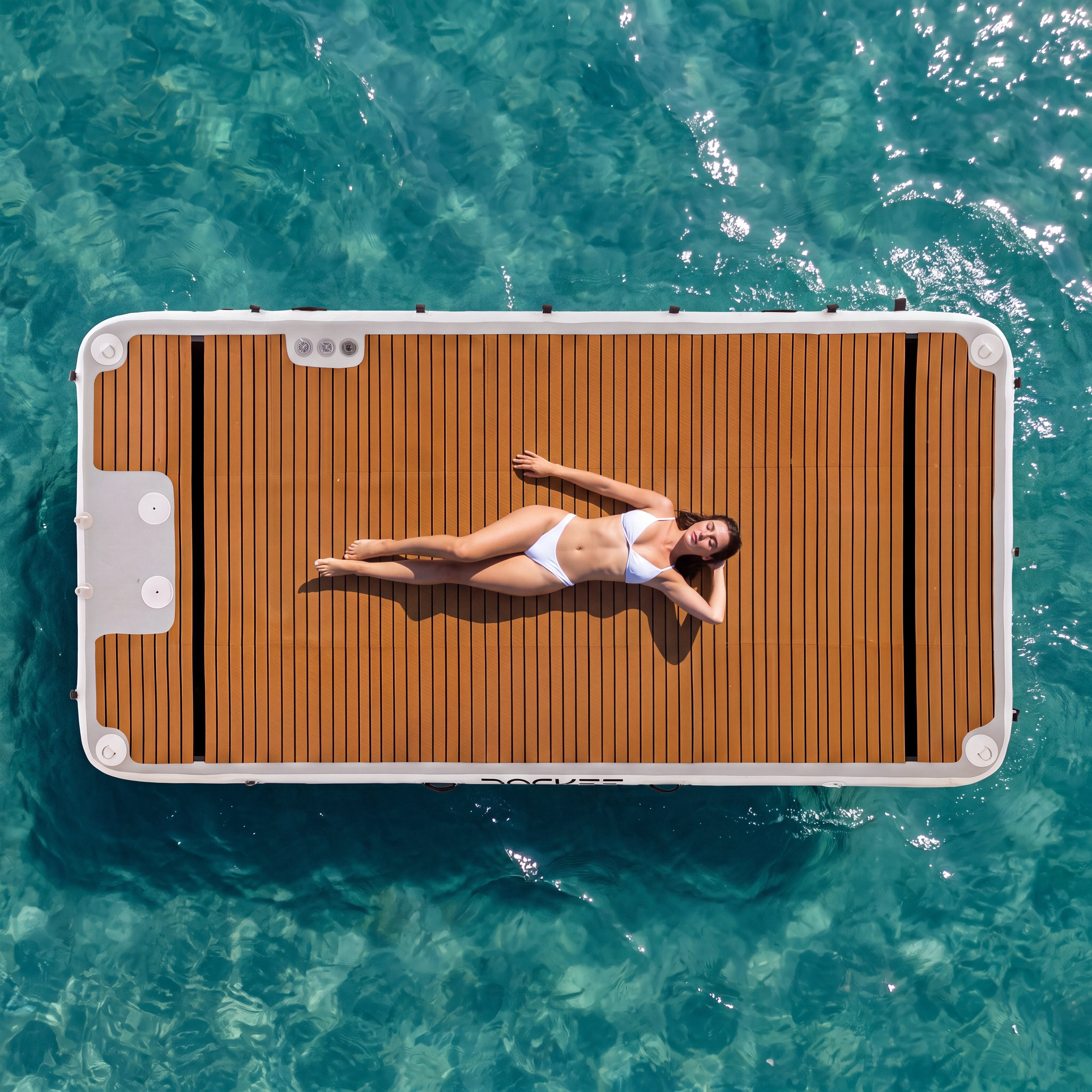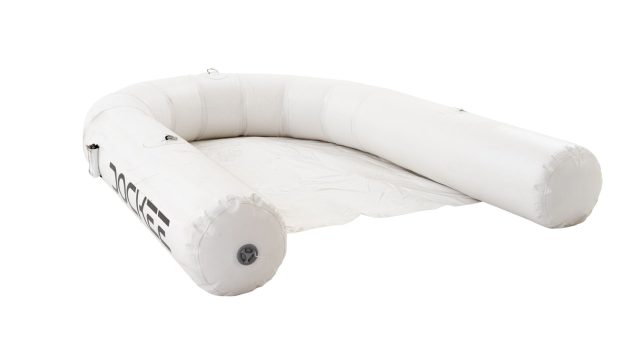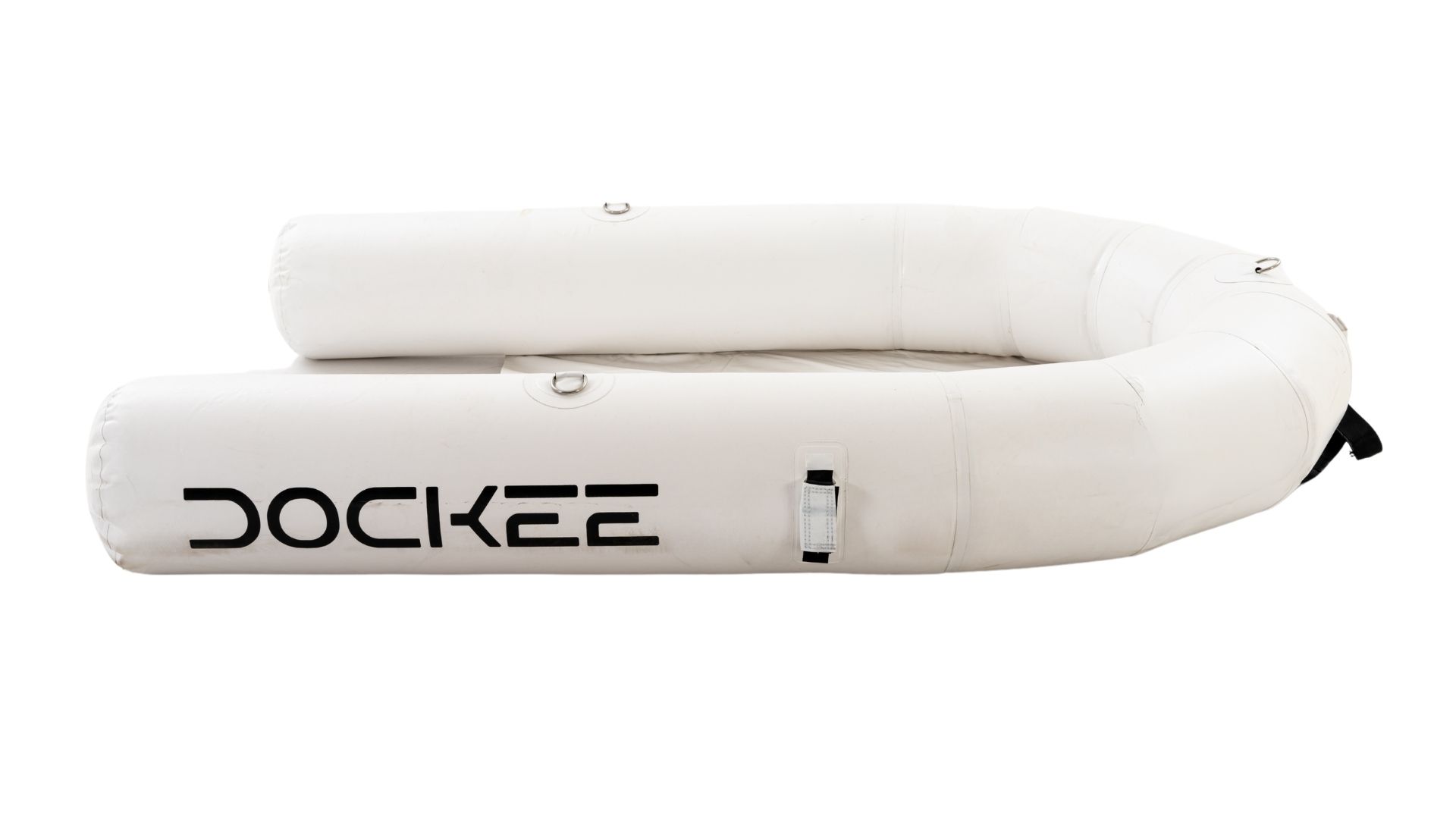
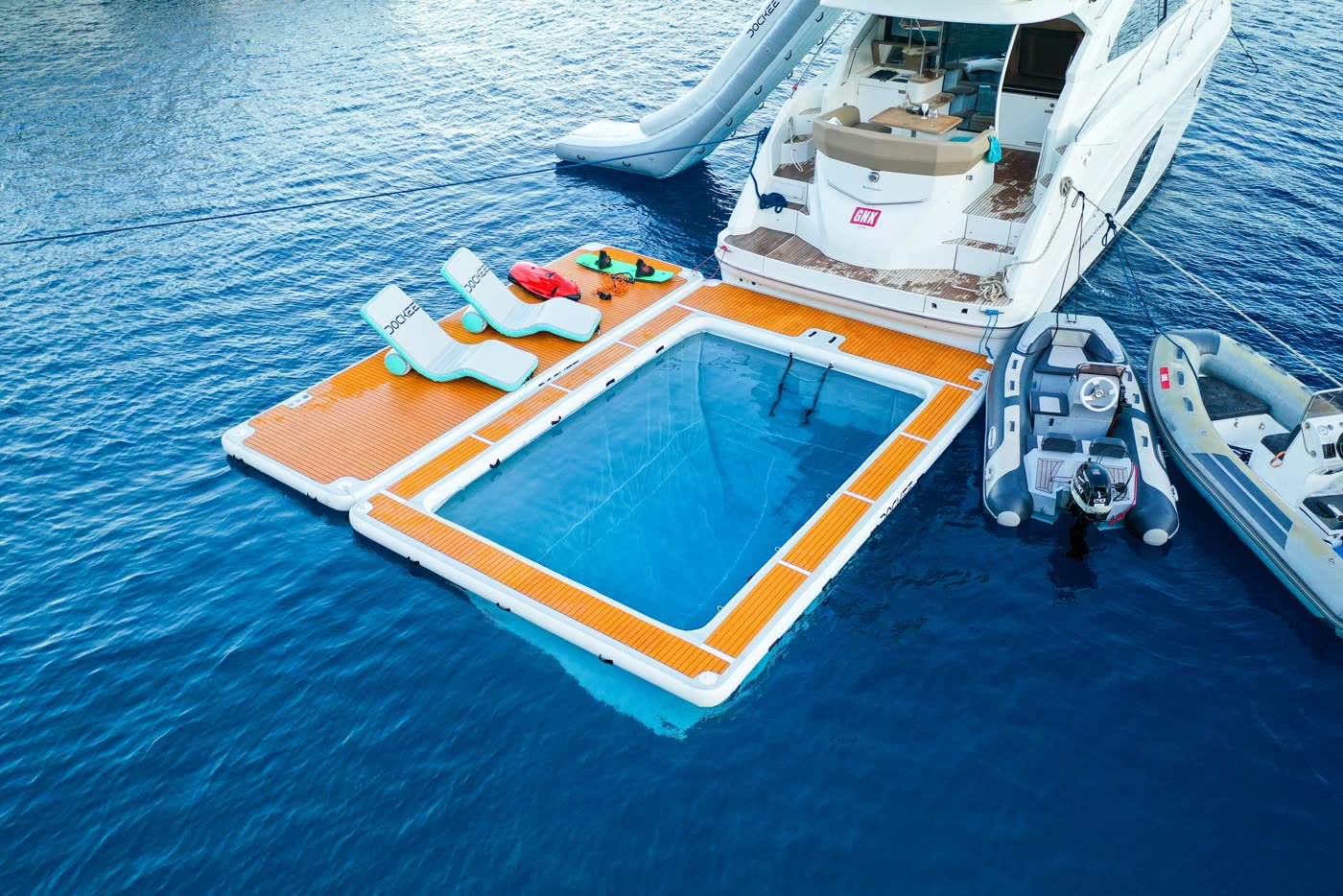
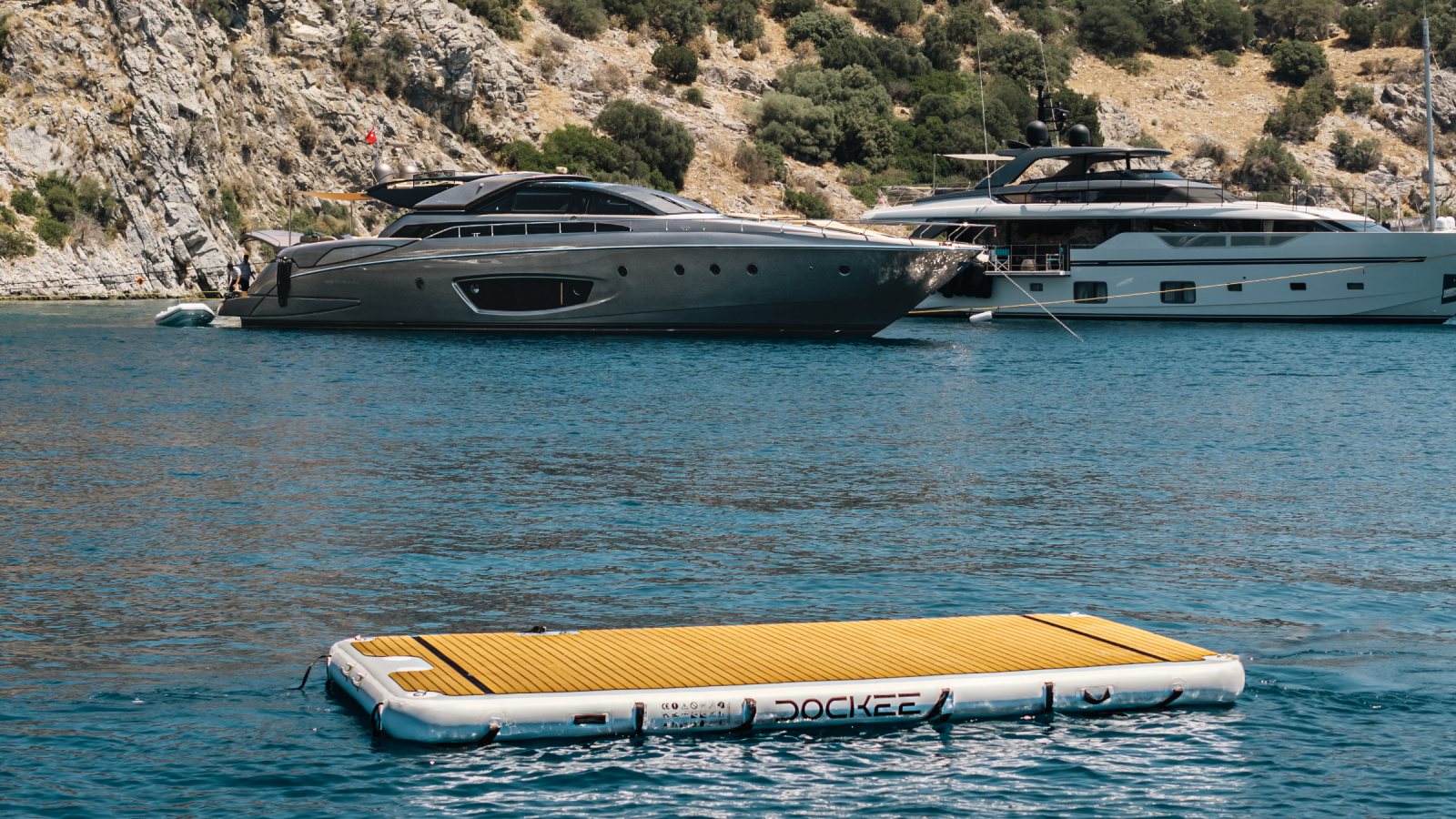
Drop-stitch inflatable platforms rely on an internal architecture of dense threads to stay flat when filled with air. This construction, combined with an outer envelope of reinforced PVC, stops the deck from rounding out like a balloon and gives guests a firm, rigid space beside the yacht.
The mechanics of drop-stitch inflatable platforms
A standard inflatable rounds out when you add air. It takes on the shape of a cylinder or a sphere, which is fine for a fender but unhelpful for a deck. To create a usable surface, marine inflatables use drop-stitch fabric. Two layers of material are joined by a dense array of internal threads.
As you introduce air with an electric pump, those internal threads pull tight. They hold both surfaces parallel. When inflated to the pressure stated in the product instructions, the product becomes flat and firm. This internal tension is what makes a floating platform feel stable underfoot. It also helps the deck stay level with guests, loungers and water toys on it.
Adding strength with reinforced PVC
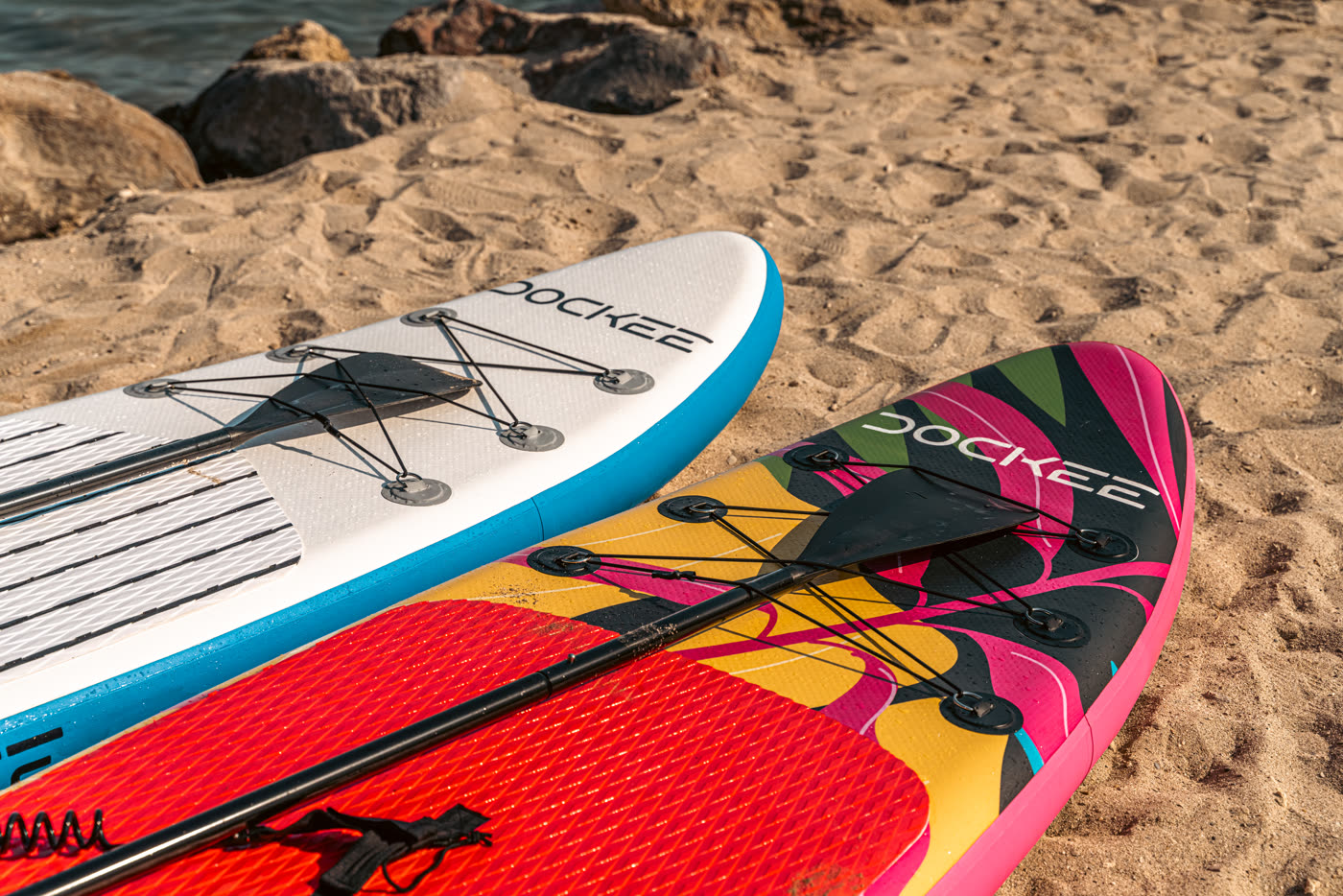
The threads give the platform its flat shape, but the outer layer provides its durability in a demanding marine environment. Dockee platforms, pools and docks use 0.9 mm PVC with the drop-stitch fabric. The SUP boards combine drop-stitch fabric with reinforced PVC, which includes an embedded woven fabric layer to add strength and tear resistance.
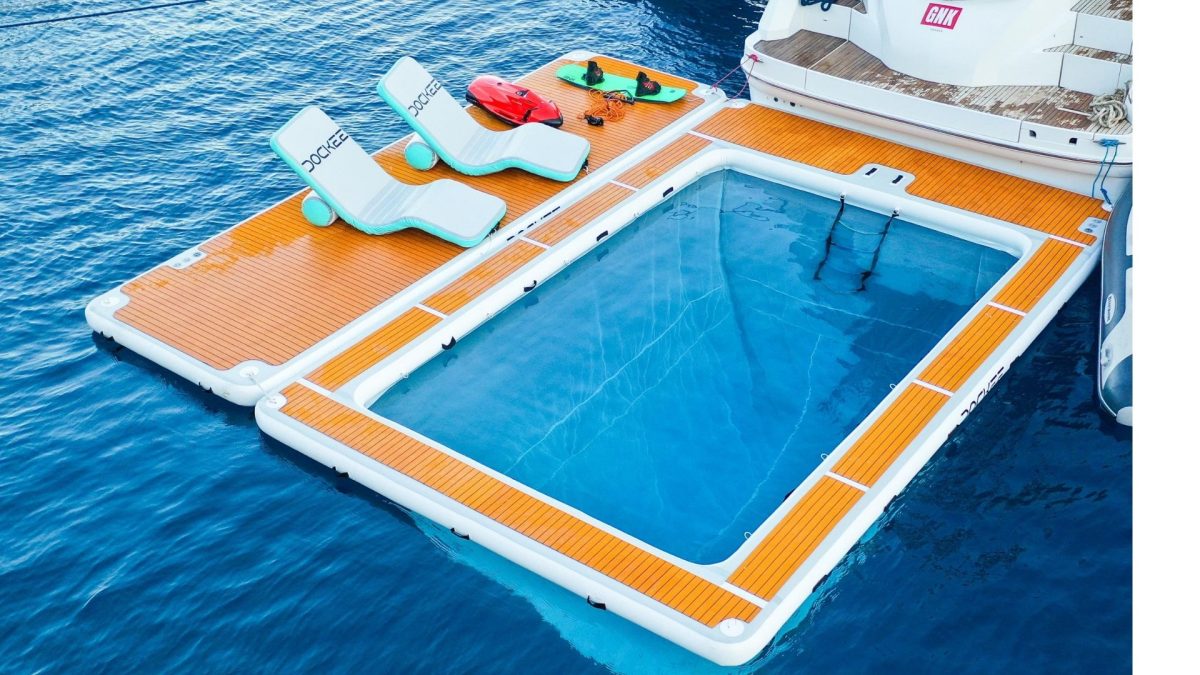
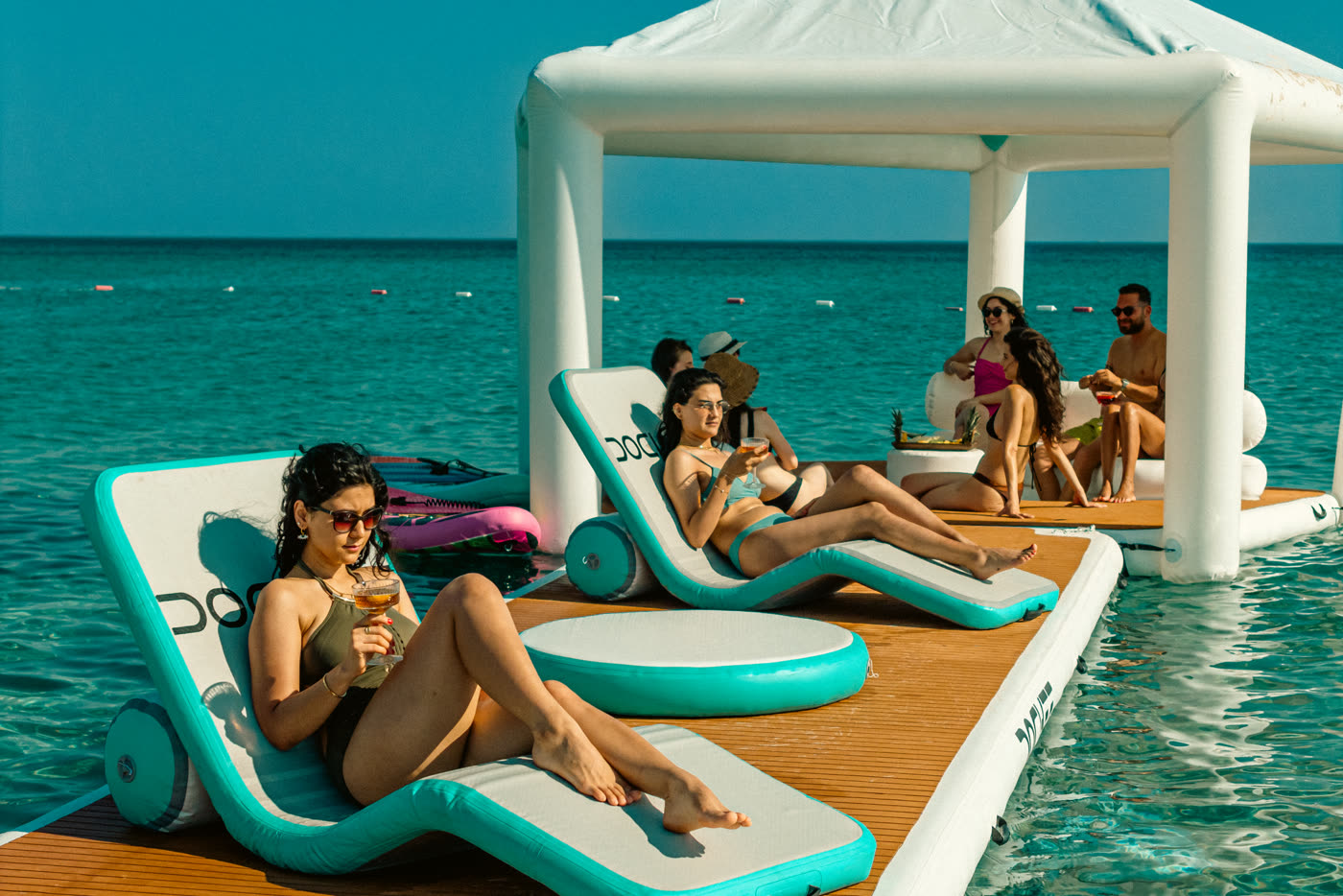
These materials are specifically chosen to be UV-resistant and saltwater-resistant. They often spend long hours in direct sun and sea water, so the fabric must withstand the elements. The top of the platforms and jet ski docks features a non-slip teak-look surface. It brings the warm appearance of a traditional aft deck down to the waterline. It is a teak look only, not real wood. It needs no oiling or sanding, requiring only a regular, gentle clean with fresh water and a mild soap solution.
Platform stability and safe use
Platform stability comes from the correct combination of internal pressure and suitable water conditions. A floating platform should always feel firm and rigid when correctly inflated. Because air expands as it warms, you should check the pressure again on hot, sunny days with a pressure gauge to ensure the deck remains at the correct tension.
To keep the platform stable for guests, always use it in calm, sheltered water. Bring the units in or secure them well when wind and waves build up. Tie lines only to strong, suitable fixing points on the yacht and keep them clear of propellers. Switch off engines and thrusters while anyone is in the water near the stern. Always supervise swimmers, especially children.
Connecting modular marine inflatables
Because drop-stitch products are flat with straight, uniform edges, you can join multiple units to build a larger deck. The AirLink Tube connects platforms, pools and docks into one continuous space. You place the units side by side, inflate the tube until it is rigid, slide it into the connection loops and fasten it with the integrated straps.
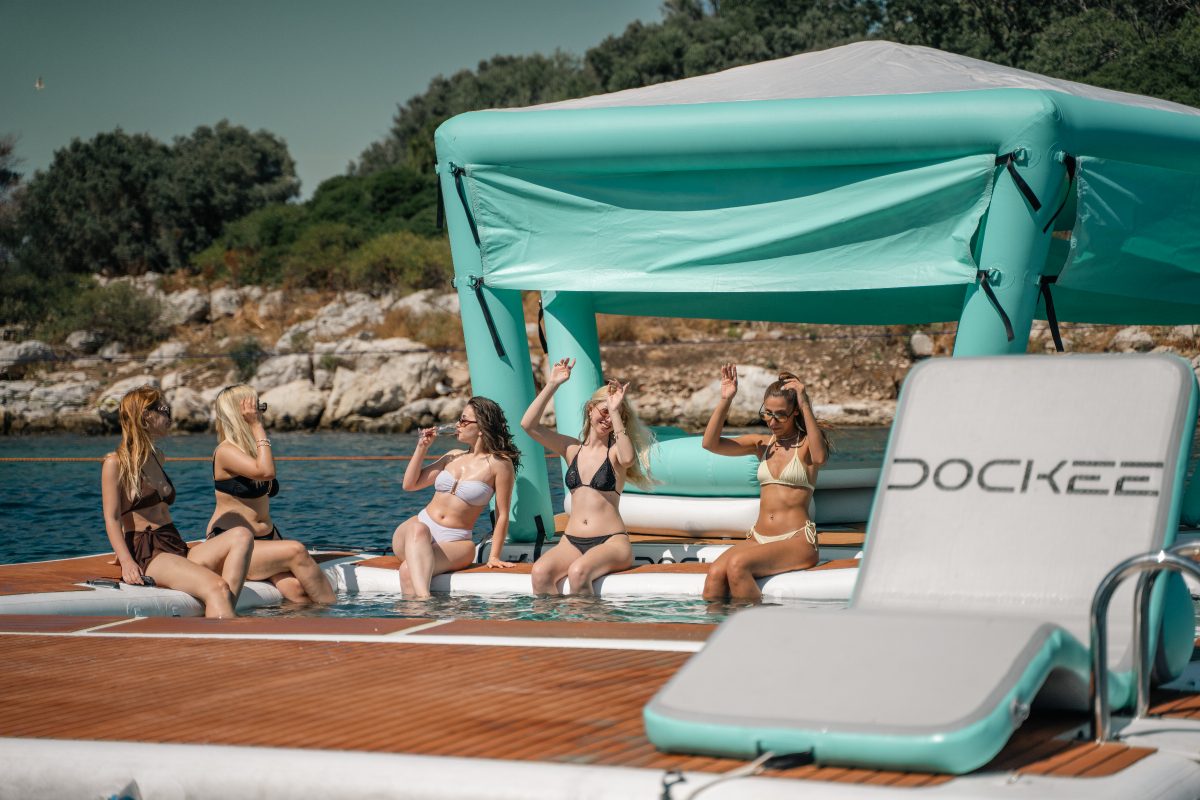
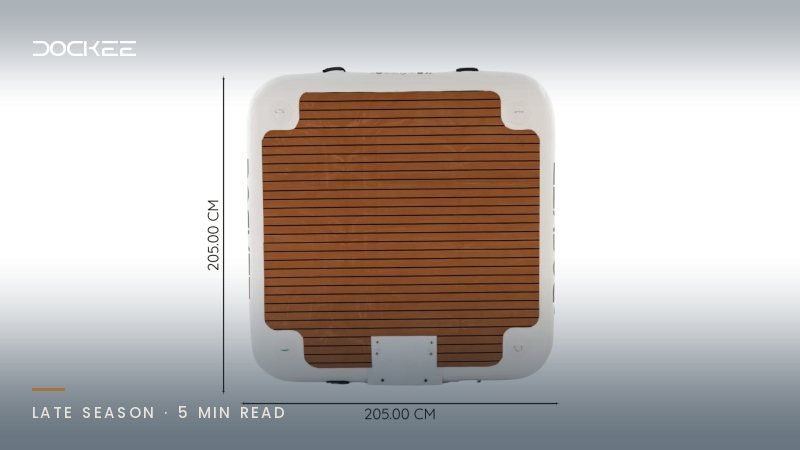
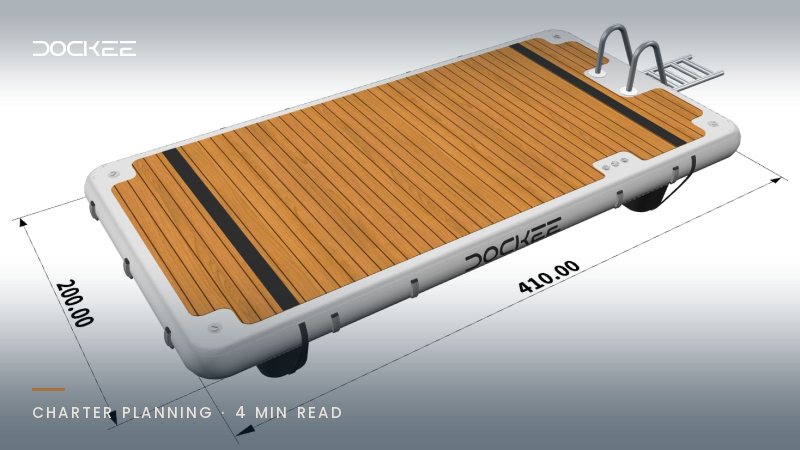
Check that everything sits tightly so nothing shifts. By linking units, you can scale the footprint to match your stern. The Premium Teak Platform comes in 2.05, 4.10, 6.16 and 8.20 m lengths, all measuring 205 cm wide. You can connect a 4.10 m platform to a dock, or join a yacht pool to a platform. This modular approach makes handling much easier for the crew.
Care and winter storage
Drop-stitch construction requires very little maintenance if handled well at the end of the season. Rinse the fabric thoroughly with fresh water after contact with salt water. Let the product air-dry completely on a clean deck free of sharp objects. Moisture trapped inside a folded platform can cause issues, so make sure the unit is entirely dry before you deflate, fold and pack it.
When not in use, store inflatables and covers dry and out of prolonged direct sunlight. Careful packing helps keep the drop-stitch material and the teak-look top in good condition. When the next charter season arrives, the platform will unfold and inflate exactly as you left it.